Mechanics of Capability
Heavy-duty (HD) trucks are not merely "larger pickups"; they are purpose-built vocational tools designed with reinforced boxed frames, massive cooling stacks, and high-pressure common-rail diesel systems. When we talk about towing capacity in the 35,000 to 40,000-pound range, we are discussing vehicles that share more DNA with semi-trucks than with light-duty passenger vehicles. For example, a modern Class 3 truck often utilizes a high-strength steel frame with a yield strength exceeding 50,000 psi to prevent bowing under vertical tongue weight.
In my years consulting for heavy-haul operations, I’ve seen the shift from simple displacement to "smart" torque. It is no longer just about the 6.7L or 6.6L engine size; it’s about how the Variable Geometry Turbocharger (VGT) manages backpressure to provide exhaust braking. Real-world testing shows that a truck rated for 30,000 pounds might feel effortless at sea level but lose 3% of its power for every 1,000 feet of elevation if the forced induction system isn't optimized for thin air. Statistics from the Department of Transportation (DOT) suggest that nearly 25% of non-commercial heavy-haulers are unknowingly operating near or over their Gross Axle Weight Rating (GAWR).
Heavy-Duty Pain Points
The most frequent error in the HD segment is the "brochure trap"—relying on the "maximum towing" number printed on the cover. That number usually applies to a base-model, regular cab, two-wheel-drive truck with zero options. As soon as you add a crew cab, 4WD, and a luxury interior, your actual payload drops by 800–1,200 pounds. This reduction directly impacts your tongue weight capacity, making a "30,000-lb rated" truck unsafe for a 25,000-lb trailer if the kingpin weight exceeds the remaining payload.
Heat is the silent killer of high-capacity rigs. I recently inspected a fleet where three trucks suffered transmission failure within 50,000 miles. The cause? The operators were manually locking out overdrive gears but failing to monitor the Transmission Fluid Temperature (TFT) during long 6% grade climbs. When fluid stays above 220°F (104°C) for extended periods, its lubricating properties break down exponentially. Failing to account for the "Sail Area" of a trailer is another massive oversight; a heavy but low-profile trailer hauls much differently than a lighter, high-profile horse trailer in a 20-mph crosswind.
Hauling Efficiency
The Ford F-450: The King of the Gooseneck
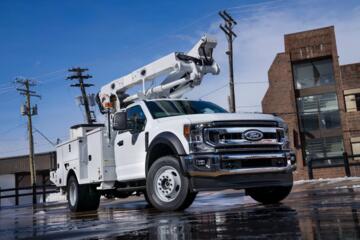
The Ford F-450 stands unique in the Class 3 segment because it utilizes a wider "Super Duty" front axle, which significantly improves the turning radius compared to an F-350. This is a game-changer for backing a 40-foot trailer into tight job sites. Its 6.7L Power Stroke V8 Diesel delivers a staggering 1,200 lb-ft of torque in the High Output (HO) configuration. This torque is managed by a 10-speed TorqShift transmission that uses real-time adaptive shift scheduling to keep the engine in its peak power band of 1,800 to 2,000 RPM.
Ram 3500 with Cummins: The Inline-6 Advantage
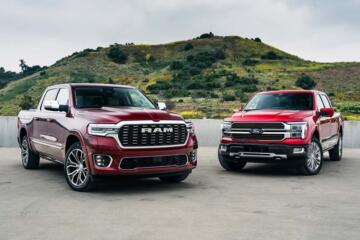
For those prioritizing longevity and low-end grunt, the Ram 3500 with the High-Output 6.7L Cummins Turbo Diesel remains the industry standard. Unlike V8 engines, the I6 design has fewer moving parts and is inherently balanced. The real-world benefit here is the Aisin AS69RC 6-speed automatic—a commercial-grade gearbox designed to handle the 1,075 lb-ft of torque without hunting for gears. In heavy-haul scenarios, this stability reduces drivetrain wear and operator fatigue over 10-hour driving shifts.
Chevrolet Silverado and GMC Sierra 3500HD: Precision Braking
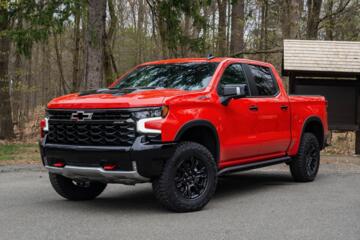
The General Motors twins, equipped with the 6.6L Duramax L5P, are widely praised for their integrated towing technology. The "Invisible Trailer" camera view (using up to 14 camera angles) solves the primary pain point of blind spots. More importantly, their Allison-branded 10-speed transmission offers the most aggressive and predictable grade braking in the segment. When descending a steep pass, the software flawlessly downshifts to use engine compression, saving the service brakes from glazing or fading.
The Critical Role of Dual Rear Wheels (DRW)
If your trailer exceeds 15,000 pounds, a "dually" is no longer optional—it is a safety requirement. Dual rear wheels provide a wider footprint that resists lateral forces (sway) caused by passing semi-trucks or wind gusts. On a DRW setup, the lateral stiffness is increased by roughly 50% compared to a single-rear-wheel (SRW) truck. This configuration also provides a redundancy factor; if one rear tire suffers a blowout while under load, the second tire maintains the axle's height, preventing a catastrophic jackknife.
Integrated Exhaust Braking and Retarders
Modern diesel HD trucks utilize the turbocharger to create backpressure, acting as a secondary braking system. For example, the "Smart" exhaust brake on the Ram Cummins system adjusts the vane position based on the cruise control setting. This allows you to maintain a steady speed on a descent without ever touching the brake pedal. In testing, this can reduce brake rotor temperatures by over 300°F on a 5-mile descent, ensuring your mechanical brakes are cool and ready if an emergency stop is required.
Aftermarket Support and Telematics
To maximize a truck’s lifespan, professional haulers use tools like the Edge Insight CTS3 or Banks iDash to monitor parameters that the factory dashboard hides, such as EGT (Exhaust Gas Temperature) and DPF (Diesel Particulate Filter) soot load. High-level fleets also integrate Geotab or Samsara telematics to track idle time—which is particularly hard on diesel engines due to carbon buildup. Reducing idle time by 15% can extend oil life by 2,000 miles and significantly reduce "limp mode" incidents related to the emissions system.
Performance Cases
Case Study 1: Alpine Construction Logistics
Alpine Construction was using SRW 2500 series trucks to haul 14,000-lb skid steer trailers through the Rockies. They experienced brake failure on two rigs and averaged 9 mpg. After switching to F-450 DRW units with High Output engines, their fuel economy improved to 11.5 mpg under load due to better gear spacing, and brake maintenance costs dropped by 40% because of the superior exhaust braking systems.
Case Study 2: Lone Star Equine Transport
A commercial horse hauler transitioned from a standard gas engine to a Ram 3500 HO Cummins. The primary issue was "panting" or power loss during 100°F Texas summers. The Cummins' massive cooling fan and heavy-duty radiator allowed them to maintain a constant 70 mph with a 20,000-lb trailer without the engine de-rating. The result was a 20% reduction in delivery times and much better animal welfare due to a smoother, more stable ride.
Top-Tier Haulers
| Model | Towing & Torque | Transmission | Core Strength |
|---|---|---|---|
| Ford F-450 | 40,000 lbs / 1,200 lb-ft | 10-Speed TorqShift | Best Turn Radius |
| Ram 3500 | 37,090 lbs / 1,075 lb-ft | 6-Speed Aisin | I6 Durability |
| GM 3500HD | 36,000 lbs / 975 lb-ft | 10-Speed Allison | Camera Tech |
Selection Risks
One of the most dangerous mistakes is ignoring the Tire Load Index. Even if your truck is rated for the load, if you have replaced the factory tires with "cool-looking" off-road tires that have a lower load rating, you are at risk of a sidewall failure. Always ensure your tires are Load Range E or F, specifically rated for the weight shown on your door jamb sticker.
Another error is the "Weight Distribution" myth for HD trucks. While WD hitches are great for 1500-series trucks, they cannot compensate for an undersized truck in the HD world. If your rear sag is more than 2-3 inches, you shouldn't just "crank up the bars"—you should look at your loading or consider an air-bag helper system like those from Air Lift or Firestone. These systems don't increase your legal capacity, but they do restore suspension geometry and headlight aim.
FAQ
Is a diesel engine always better than gas for towing?
For loads over 12,000 pounds or frequent mountain driving, diesel is superior due to torque and exhaust braking. However, for occasional short-distance hauling of lighter loads, modern gas engines (like the Ford 7.3L Godzilla) offer lower maintenance costs and higher payload capacities because the engine itself is lighter.
What is the difference between a 2500 and 3500 for hauling?
While they often share engines, the 3500 has a much higher payload due to stiffer rear leaf springs and, frequently, a dual-rear-wheel option. A 2500 is often limited by a 10,000-lb Gross Vehicle Weight Rating (GVWR) for registration reasons, which severely limits its legal tongue weight.
Does 4WD reduce my towing capacity?
Yes. The 4WD system (transfer case, front differential, and driveshafts) adds several hundred pounds of weight to the truck. Since this weight counts against your GVWR, a 2WD version of the same truck will almost always have a higher legal payload and towing capacity.
How often should I change fluids when towing heavily?
If you are towing at more than 70% of your capacity frequently, follow the "Severe Service" interval in your manual. This typically means changing transmission fluid and differential gear oil every 30,000 to 45,000 miles, rather than the standard 100,000-mile interval.
What is the "Max Tow Package" exactly?
It usually includes a higher-ratio rear axle (e.g., 4.10 instead of 3.73), an upgraded cooling fan, a heavier-duty hitch receiver, and sometimes reinforced frame sections. Never assume a truck has it just because it has a hitch; always check the window sticker or VIN.
Author’s Insight
In my experience, the "best" truck is the one that has the most overhead for your specific job. I always advise clients to buy 20% more capacity than they think they need. Operating a truck at 99% of its limit every day leads to rapid component fatigue and driver stress. I personally prefer the F-450 for the turning radius alone—it makes a massive difference when you're 60 feet long and trying to navigate a fuel station. My biggest tip? Ignore the horsepower and watch your transmission temperatures; heat kills more trucks than weight ever will.
Summary
Selecting the right heavy-duty pickup requires a deep dive into GAWR, GCWR, and real-world torque curves rather than just picking a brand color. For maximum legal towing, the Ford F-450 leads the pack, while the Ram 3500 with the Cummins engine offers an unmatched lineage of reliability. Chevrolet and GMC provide the most user-friendly technology suite for those who find maneuvering large trailers intimidating. To maximize your investment, prioritize a dual-rear-wheel configuration for stability, monitor your temperatures religiously, and always calculate your payload based on the specific door jamb sticker of your vehicle. Proper equipment selection is the difference between a profitable, safe haul and a mechanical failure on the side of the road.