Factory-Built Off-Roaders
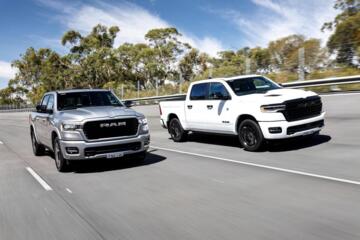
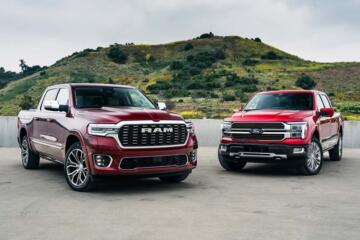
Modern pickup trucks have transitioned from basic workhorses to sophisticated mechanical athletes. Years ago, "off-road package" usually meant a few stickers and slightly stiffer shocks; today, it signifies a comprehensive engineering overhaul. Manufacturers like Ford, Chevrolet, and Ram now integrate bypass dampers, high-clearance bumpers, and sophisticated terrain management software directly into the assembly line.
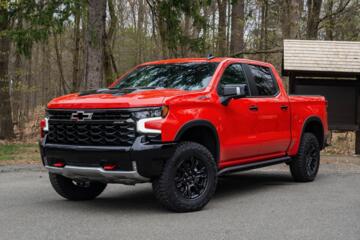
In practice, a factory package like the ZR2 or Tremor provides a level of integration that aftermarket kits often struggle to match. For instance, the electronic stability control (ESC) is specifically calibrated for the larger tire diameters and increased center of gravity found in these trims. This ensures that safety systems don't trigger prematurely when you're navigating a steep 15-degree side slope or a loose gravel wash.
According to SEMA market reports, nearly 60% of truck owners plan to modify their vehicles for off-road use within the first two years of ownership. By opting for a high-tier factory package, buyers often save upwards of $5,000 to $8,000 compared to the cost of purchasing and installing equivalent high-end suspension, tires, and armor separately, all while maintaining a full powertrain warranty.
Choosing the Wrong Spec
The most common mistake weekend warriors make is prioritizing aesthetics over mechanical capability. Many buyers opt for "appearance packages" that include blacked-out trim and aggressive tires but lack the critical hardware—like a locking rear differential or underbody skid plates—required for technical recovery or rocky ascents. On a trail like the Black Bear Pass in Colorado, lacking a true low-range transfer case can lead to catastrophic brake fade or transmission overheating.
Another significant pain point is the "Payload Penalty." Off-road suspensions are designed for articulation and softness to soak up bumps, which often reduces the truck's maximum towing and hauling capacity. If you plan to mount a 200-lb rooftop tent, a fridge, and a steel drawer system, a "soft" off-road suspension might sag excessively, ruining your departure angles and causing the vehicle to bottom out on moderate obstacles.
Failing to account for wheel travel and tire clearance results in "rubbing" during full articulation. In real-world scenarios, this doesn't just make a noise; it can tear inner fender liners or slice tire sidewalls against sharp metal edges. Choosing a factory package ensures that the wheel arches are clearanced for the specific tire size provided, preventing trailside repairs that could have been avoided at the dealership.
Engineering Solutions
Multimatic DSSV Dampers: The Precision Revolution
Found exclusively on Chevrolet's ZR2 and Silverado platforms, Multimatic Spool Valve (DSSV) technology is a game-changer. Unlike traditional shim-based shocks, these use laser-cut spool valves to control oil flow with incredible precision. This allows the truck to remain stiff and controlled on the pavement while becoming exceptionally plush over high-speed washboard roads. It eliminates the "pogo" effect common in cheaper twin-tube shocks.
Hydraulic Jounce Bumpers and High-Speed Compression
The Ram 1500 TRX and Ford Raptor utilize active damping systems from Bilstein and Fox that can adjust their valving 100 times per second. These systems use internal bypass technology to provide "zones" of damping. In the initial stroke, the ride is soft; as you hit a deep rut, the resistance increases exponentially to prevent the frame from slamming into the axles. This is crucial for maintaining momentum on desert tracks.
Locking Differentials vs. Brake-Based Traction Control
Standard traction control uses the brakes to stop a spinning wheel, which is reactive and builds heat. Professional-grade packages, such as the Toyota Tacoma TRD Pro or Jeep Gladiator Rubicon, feature mechanical or electronic lockers. By physically locking the axles together, power is distributed 50/50 to both wheels regardless of traction. This is the difference between crawling over a wet ledge and being stuck in the mud for hours.
Integrated Winch and Recovery Point Engineering
Recovery is an overlooked aspect of weekend trips. The Heavy Duty Rebel and Power Wagon trims now offer factory-integrated Warn winches hidden behind the bumper. These are crash-tested and integrated into the vehicle's cooling system airflow. Having a 12,000-lb capacity winch from the factory means your frame mounts are engineered to handle the massive stress of a recovery, unlike some bolt-on aftermarket hitches.
360-Degree Camera Systems with Trail Views
Visibility is the primary challenge in a large pickup. Modern packages from GMC and Ford include "surround-view" cameras that can see "through" the hood to show exactly where the front tires are placed relative to a sharp rock or a drop-off. This tech effectively replaces a human spotter, allowing solo travelers to navigate technical Class 3 trails safely without leaving the cabin.
Hybrid Torque for Low-Speed Technical Crawling
The Toyota Tundra i-FORCE MAX and Ford F-150 PowerBoost utilize electric motors to provide instant peak torque at 0 RPM. In traditional gas engines, you have to "rev up" to get power, which can cause you to lurch forward dangerously. Electric assistance allows for a "surgical" crawl, where the truck moves inches at a time with extreme precision, protecting both the drivetrain and the environment.
Performance in the Wild
Case Study 1: The High-Speed Desert Run
A photography team in Moab, Utah, transitioned from a standard half-ton truck to a Ford Raptor R for scouting locations. They reported that on 40-mile stretches of corrugated dirt roads, their average safe speed increased from 15 mph to 45 mph. This saved them two hours of transit time per day. More importantly, the cooling capacity of the Fox Live Valve shocks meant they experienced zero "shock fade," a common failure point where standard dampers lose effectiveness due to heat buildup.
Case Study 2: The Payload Challenge
An overlanding couple outfitted a Chevrolet Colorado ZR2 with a full bed rack and camping gear totaling 900 lbs. Because the ZR2 features a specifically tuned leaf spring pack for its increased ride height, the vehicle maintained 9.5 inches of ground clearance even when fully loaded. Compared to a standard truck with an aftermarket leveling kit, the ZR2 maintained a 24% better approach angle, allowing them to traverse the "Elephant Hill" trail in Canyonlands without scraping their front fascia.
Package Comparison
| Feature | Standard "Z71/FX4" Level | Professional "ZR2/TRD Pro" Level | Extreme "Raptor/TRX" Level |
|---|---|---|---|
| Shock Diameter | 1.5" - 2.0" Twin Tube | 2.5" Mono-tube or Spool Valve | 3.0" - 3.5" Internal Bypass |
| Rear Traction | Auto-locking or Brake-LSD | Selectable E-Locker | Electronic Locker + Wide Track |
| Tire Size | 31" - 32" All-Terrain | 33" - 35" Mud/Rugged Terrain | 35" - 37" Specialized Compound |
| Underbody Armor | Plastic or Thin Stamped Steel | Heavy-duty Aluminum/Steel Plates | Full-length High-strength Shielding |
Common Mistakes to Avoid
Never assume that "Four-Wheel Drive" means "All-Wheel Drive." Many part-time 4WD systems found in off-road packages should never be engaged on dry pavement, as this causes "driveline bind" and can snap an axle shaft. Only use 4H or 4L when the surface allows for tire slip (dirt, snow, mud).
Don't ignore the "Gearing" factor. If you plan to upgrade to larger tires later, check if your factory package comes with a 4.10 or 4.30 rear axle ratio. Trucks with 3.21 or 3.42 gears will struggle to turn larger tires, leading to poor fuel economy and excessive transmission heat. Packages like the Jeep Rubicon or Ram Power Wagon come pre-geared for 35-inch tires, saving you a $2,500 re-gearing job later.
Finally, always check the recovery points. Some "off-road" trims use open-ended hooks that can allow a recovery strap to slip off under tension. Always verify that your truck has closed-loop shackle mounts or heavy-duty through-frame hooks before attempting a snatch-block recovery.
FAQ
Does an off-road package void my factory warranty?
No. Unlike aftermarket lifts, a factory package like the TRD Pro or ZR2 is fully covered. However, damage caused by "misuse" (jumping the truck or deep water submersion) may still be denied.
Are these trucks too wide for standard parking spots?
The "Extreme" class (Raptor/TRX) is roughly 8 inches wider than a standard truck and may require extra care in garages. Mid-size options like the Canyon AT4X are much more urban-friendly.
Will these packages significantly decrease gas mileage?
Yes. Expect a 15-25% drop in MPG due to the increased rolling resistance of knobby tires and the aerodynamic drag of a higher ride height.
Can I tow a heavy boat with an off-road truck?
Generally, yes, but your capacity will be lower. A standard F-150 might tow 13,000 lbs, while a Raptor is limited to 8,200 lbs due to its softer long-travel springs.
Do I really need 35-inch tires for weekend camping?
For 90% of forest service roads, 32-inch tires are sufficient. 35s are only necessary if you plan on traversing deep ruts or rocks larger than a bowling ball.
Author’s Insight
After a decade of testing vehicles on everything from the Rubicon Trail to the dunes of Baja, I’ve learned that the best truck is the one that gets you home. I always recommend the "one-step-up" rule: buy a package that is slightly more capable than you think you need. It’s better to have a locking differential and never use it than to be stuck in a remote canyon with one wheel spinning helplessly in the air. My personal favorite for the "average" adventurer is the mid-size segment—the power-to-weight ratio and narrower body make them far more capable on tight, wooded trails than their full-size siblings.
Summary
Selecting the right off-road pickup package requires a balance between mechanical hardware and real-world usability. Focus on the "Big Three": suspension quality (look for Fox, Bilstein, or Multimatic), traction aids (aim for a selectable rear locker), and protection (steel skid plates). By choosing a factory-engineered solution, you ensure that your weekend adventures remain focused on the scenery rather than mechanical failures. Before you buy, define your primary terrain—be it high-speed desert, tight mountain trails, or muddy forest roads—and match the damping tech to your environment. Your truck is your lifeline; spec it accordingly.