Factory Integrity
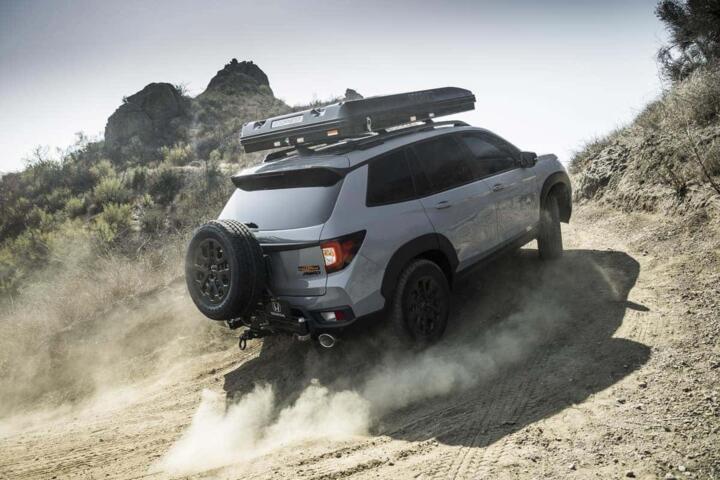
The term "Off-Road" has been diluted by the rise of the crossover. To an engineer, off-road capability is defined by three pillars: geometry, traction management, and durability. A vehicle might have all-wheel drive, but without adequate ground clearance and cooling for the transmission, it remains a soft-roader. True trail-ready SUVs utilize body-on-frame construction or heavily reinforced unibodies with dedicated low-range transfer cases.
In practice, a low-range gear ratio (often 2.72:1 or 4:1) allows a vehicle to crawl over obstacles at 1-2 mph while keeping the engine in its power band. For instance, a stock Jeep Wrangler Rubicon offers a crawl ratio of up to 100:1, allowing it to scale vertical rock faces that would smoke the clutch of a standard SUV. Data from the Specialty Equipment Market Association (SEMA) indicates that 15% of SUV owners intend to use their vehicles off-road, yet fewer than 5% of "off-road styled" trims feature the necessary underbody shielding to prevent catastrophic oil pan failure.
Equipment Failure Risks
The biggest mistake buyers make is equating "All-Wheel Drive" (AWD) with "Four-Wheel Drive" (4WD). AWD systems are designed for high-speed stability on rain or snow; they lack the heat dissipation required for prolonged sand driving or technical rock crawling. When pushed, the center couplings in many AWD systems overheat, prompting a "2WD Mode" warning precisely when you need traction most.
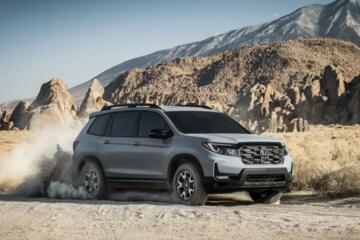
Another pain point is the "Appearance Package" trap. Many manufacturers sell "Off-Road Editions" that consist only of plastic cladding, black wheels, and slightly different floor mats. These vehicles often retain 20-inch wheels with low-profile tires. In the backcountry, a low-profile tire has no sidewall to flex or "air down," leading to punctured tires and cracked rims on the first sharp rock encounter.
The Critical Role of Approach and Departure Angles
Geometry is the ultimate gatekeeper of the trail. The approach angle determines the steepest incline you can climb without burying your front bumper. A standard family SUV might have a 20-degree approach angle, whereas a trail-rated vehicle like the Ford Bronco Badlands offers 43.2 degrees. Without this clearance, you risk ripping off expensive sensor-laden bumpers before the tires even touch the obstacle.
The Difference Between Electronic Braking and Locking Differentials
Many modern SUVs use "Brake-Lock Differentials" (BLD). This system uses the ABS to pinch a spinning wheel, forcing torque to the side with grip. While effective for a slippery driveway, it is reactive rather than proactive. In sustained off-road use, this constant braking generates immense heat and wears down pads prematurely. A mechanical locker, found in the Toyota 4Runner TRD Pro, physically joins the axles, ensuring both wheels turn at the same speed regardless of resistance.
Suspension Travel and Articulation Needs
Articulation keeps tires on the ground. When one wheel goes into a hole, the suspension must drop (droop) to maintain contact. If the suspension is too stiff or lacks travel, a wheel will lift into the air. Once a wheel loses contact, you lose 50% of your traction on that axle. Vehicles with sway-bar disconnects, like the Ram 2500 Power Wagon, allow for maximum flex, ensuring the chassis remains stable while the wheels contour to the terrain.
Thermal Management in Slow-Speed Crawling
Off-roading is high-stress, low-airflow work. Engines and transmissions rely on airflow to stay cool, but on a trail, you are moving at walking speeds. Factory SUVs built for the trail include auxiliary oil coolers and heavy-duty radiators. Vehicles not designed for this environment often suffer from transmission fluid degradation, leading to "limp mode" incidents in remote areas where recovery is expensive.
The Impact of Wheel Diameter and Sidewall Ratio
Serious trail work requires 17-inch or 18-inch wheels. This allows for a taller tire sidewall. When you "air down" to 15-20 PSI, the tire elongates its footprint, increasing surface area by up to 250%. This provides "flotation" on soft sand and wraps the tread around rocks for mechanical grip. An SUV with 22-inch wheels cannot do this, making it functionally useless on anything tougher than a gravel road.
Solutions for Terrain
To survive a trail, an SUV must have a "recovery-first" design. This starts with frame-mounted recovery points. If you get stuck, you need a point on the vehicle that can withstand 1.5 to 2 times the vehicle's Gross Vehicle Weight Rating (GVWR). Using a "tie-down" hook intended for shipping will result in the hook snapping and becoming a lethal projectile.
In practice, look for high-clearance exhaust systems and tucked-up fuel tanks. The Land Rover Defender, for example, uses a sophisticated air suspension system that can lift the body by an extra 3 inches on demand. This provides the best of both worlds: a low center of gravity for highway stability and high clearance for crossing deep water or jagged rocks. Always verify the "wading depth" rating; a Jeep Gladiator can handle 31.5 inches of water because its air intake and breathers are mounted high in the engine bay.
Capability Comparison
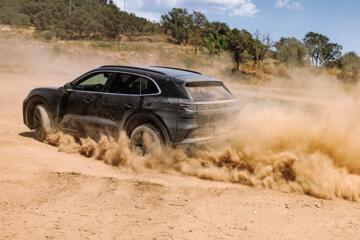
A recent comparison involved a luxury "Off-Road Styled" crossover and a base-trim mid-size SUV with a 2-speed transfer case. Both attempted a 12-mile moderate trail in Moab, Utah. The crossover suffered a transmission overheat warning within the first three miles of sand dunes due to its CVT (Continuously Variable Transmission) struggling with the load. It eventually tore a plastic skid plate. The 2-speed SUV completed the trail in "4-Low" without exceeding 210 degrees Fahrenheit in transmission temp, demonstrating that mechanical gearing beats electronic simulation every time.
Another case involves a fleet of modified SUVs used for geological surveys in the Australian Outback. The fleet shifted from AWD unibody SUVs to body-on-frame vehicles with solid rear axles. Maintenance costs dropped by 40% annually because the solid axle components could withstand the "corrugated" dirt roads that were literally shaking the independent suspension bushings of the previous vehicles to pieces.
Trail Readiness List
| Feature | Minimum Requirement | The "Pro" Standard |
|---|---|---|
| Ground Clearance | 8.5 Inches | 10.5+ Inches |
| Transfer Case | Single Speed (AWD) | 2-Speed with 4-Low |
| Tires | All-Season (M+S) | All-Terrain (3PMSF Rated) |
| Underbody Protection | Plastic Splash Shields | Steel or Aluminum Skid Plates |
| Traction Aid | Open Diff w/ Brake Control | Selectable Locking Rear Diff |
Common Errors in Use
Many owners assume that "Sport Mode" helps off-road. In reality, Sport Mode usually sharpens throttle response, which is the last thing you want when crawling over rocks. A jerky throttle leads to wheel spin and broken axles. Instead, look for "Sand" or "Rock" modes which often dampen throttle input to allow for precise tire placement.
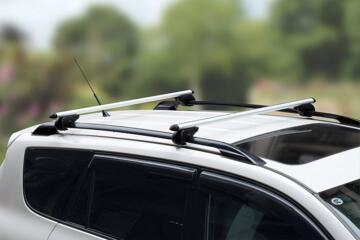
Another error is ignoring the "payload" rating when adding off-road gear. Adding a steel bumper, winch, roof rack, and a drawer system can easily add 800 lbs. If your SUV only has a 1,200 lb payload capacity, you have very little room left for passengers and fuel. Overloading leads to suspension sag, which ruins your departure angle and makes the vehicle prone to tipping on off-camber sections.
FAQ
Can I take a leased SUV off-road?
Technically yes, but "excessive wear and tear" clauses often cover underbody damage, pinstriping from bushes, and clogged filters. Always check your contract; most allow for light gravel but exclude "stunting" or "rock crawling."
Is a snorkel only for deep water?
No. While they help with wading, their primary purpose in a convoy is to pull cleaner, cooler air from a higher point, preventing the air filter from clogging with dust kicked up by the vehicle in front.
What is the most important upgrade for a stock SUV?
Tires. Even a basic AWD SUV becomes significantly more capable with a set of high-quality All-Terrain tires like the BFGoodrich KO2 or Falken Wildpeak AT3W.
Does a lift kit void my warranty?
In the US, the Magnuson-Moss Warranty Act protects consumers. A dealer must prove that the lift kit specifically caused a failure to deny a claim. However, it will likely void coverage on CV axles and suspension bushings.
What is "Crawl Control"?
It is essentially low-speed cruise control for off-roading. It manages throttle and braking at each wheel, allowing the driver to focus entirely on steering. It is highly effective for getting unstuck in deep sand.
Author's Insight
In my two decades of trail driving, I have seen $100,000 luxury SUVs get humbled by $5,000 old trucks simply because the latter had better clearance and simpler mechanicals. My advice is always to buy the "bones" of the car: the frame, the transfer case, and the cooling system. You can always bolt on better lights or a roof rack later, but you can't easily add a low-range gear or a solid axle to a vehicle that wasn't built for it. Always prioritize mechanical redundancy over electronic gadgets when you are 50 miles from the nearest cell tower.
Summary
Identifying a truly trail-capable SUV requires looking past the rugged aesthetics to the mechanical specifications beneath the chassis. Focus on vehicles that offer a 2-speed transfer case, at least 9 inches of ground clearance, and a dedicated cooling system for the drivetrain. For those serious about exploration, sticking to proven platforms with body-on-frame construction or reinforced unibodies ensures the vehicle survives the journey. Before heading out, invest in a quality tire pressure gauge and a set of recovery traction boards—these two tools alone solve 80% of common trail mishaps.