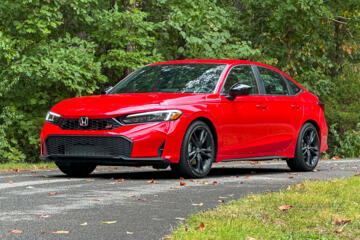
Occupant Protection
Modern vehicle safety is no longer just about the number of airbags; it is an integrated system of "soft" and "hard" technologies. The "hard" tech involves the crumple zones—areas designed to deform and absorb energy—while the "soft" tech includes Advanced Driver Assistance Systems (ADAS) that prevent the crash from happening in the first place.
In my experience inspecting post-collision vehicles, the difference between a minor injury and a fatality often comes down to the "safety cage" integrity. For instance, according to the Insurance Institute for Highway Safety (IIHS), vehicles earning a "Good" rating in the small overlap front test are 70% less likely to result in a driver fatality compared to those rated "Poor."
A practical example is the evolution of the B-pillar. In older sedans, a side impact often resulted in significant cabin intrusion. Modern leaders like the Volvo S60 or the Audi A4 utilize ultra-high-strength boron steel in these pillars, maintaining the survival space even when struck by a heavy SUV.
Safety Eval Pitfalls
Many buyers rely solely on outdated five-star ratings without looking at the specific test parameters. A common mistake is ignoring the "Small Overlap" test, which simulates hitting a tree or a pole with just 25% of the front bumper. This is where many older designs fail because the impact bypasses the main longitudinal crash beams.
Another pain point is the "safety vs. size" myth. While physics dictates that a heavier car generally fares better in a multi-vehicle crash, a poorly engineered large sedan can be more dangerous than a highly engineered compact. For example, some larger cars exhibit high "roof crush" rates, leading to severe injuries in rollover accidents.
Real-world consequences are visible in the data: the NHTSA reports that frontal collisions account for 54% of passenger vehicle occupant deaths. If your chosen model hasn't been updated to meet the 2024 side-impact standards—which use a heavier striking barrier moving at higher speeds—you are essentially buying yesterday's protection.
The Role of High-Strength Steel in Impact Distribution
The chassis of a top-tier sedan acts as a lightning rod for kinetic energy. Brands like Honda use "Advanced Compatibility Engineering" (ACE), which directs impact energy away from the cabin and into the lower frame. This prevents the engine block from being pushed into the driver's footwell during a high-speed encounter.
Evaluating Active Safety vs. Passive Hardware
Passive safety is what saves you during the crash; active safety is what keeps you out of it. Systems like Automatic Emergency Braking (AEB) with pedestrian detection are now mandatory for a "Top Safety Pick+" designation. Data shows that AEB reduces rear-end collisions by nearly 50% in urban environments.
Rear Seat Protection: The New Frontier
For years, rear-seat safety lagged behind. However, new IIHS tests now use a dummy in the back to measure "submarining"—where the passenger slides under the seatbelt. Top models like the Toyota Camry have updated their rear tensioners and force limiters specifically to address this often-overlooked danger zone.
Headlight Visibility and Nighttime Security
Nearly half of all fatal crashes happen at night. A sedan might have the best structure, but if its "Marginal" rated halogen lights only illuminate 200 feet ahead at 60 mph, the driver has zero reaction time. LED projectors with "High Beam Assist" are now a critical safety metric.
The Impact of Weight Distribution on Rollover Stability
Sedans naturally have a lower center of gravity than SUVs, making them inherently more resistant to rollovers. However, electric sedans like the Tesla Model 3 take this further by placing the heavy battery pack in the floor, creating a "low-slung" mass that makes flipping the vehicle nearly impossible under standard road conditions.
Road Security Solutions
When searching for the safest model, you must prioritize the IIHS "Top Safety Pick+" (TSP+) award. This is the gold standard because it requires high ratings in every crash category, including the updated side-impact test. For 2024 and 2025, look for models like the Acura Integra or the BMW 3 Series, which consistently hit these benchmarks.
Implementing a "Safety-First" buying strategy works because it focuses on non-negotiable engineering traits. On the road, this looks like choosing a vehicle with "Level 2" autonomy features—systems that combine lane-keeping assist with adaptive cruise control to reduce driver fatigue, a leading cause of highway accidents.
Services like Consumer Reports and Euro NCAP provide deep-dive telemetry data that standard dealership brochures omit. By checking the "Driver Injury Measurements" in technical reports, you can see exactly how many millimeters of intrusion occurred in the footwell during a test. A result under 100mm is excellent; anything over 200mm indicates a high risk of lower-limb entrapment.
Safety Performance Cases
Case Study 1: The Fleet Safety Overhaul
A regional logistics firm replaced their aging mid-size sedan fleet with 2023 Subaru Legacys. The Legacy features "EyeSight" Driver Assist Technology. Within 12 months, the firm reported a 35% decrease in "at-fault" fender benders and a 20% reduction in insurance premiums. The EyeSight system’s dual color cameras were cited as the primary reason for avoiding low-visibility collisions.
Case Study 2: High-Speed Survival
A private client was involved in a 55-mph T-bone collision while driving a Genesis G80. Despite the severity, the vehicle’s center airbag—deployed between the driver and front passenger—prevented "occupant-to-occupant" head strikes. The car was a total loss, but the driver walked away with only bruising, demonstrating the value of specialized airbag configurations.
Compare Safety Leaders
| Model Class | Top Recommended Model | Key Safety Feature | IIHS Rating (2024) |
|---|---|---|---|
| Compact Sedan | Mazda 3 | Advanced Smart Brake Support | Top Safety Pick+ |
| Mid-Size Sedan | Toyota Camry (2025) | Toyota Safety Sense 3.0 | Top Safety Pick+ |
| Luxury Sedan | Mercedes-Benz C-Class | Pre-Safe Impulse Side | Top Safety Pick |
| Electric Sedan | Hyundai IONIQ 6 | Blind-Spot View Monitor | Top Safety Pick+ |
Safety Purchasing Errors
One of the most dangerous mistakes is assuming all trims of a model have the same safety tech. Often, the base trim uses inferior headlights or lacks the radar sensors found in higher trims. Always verify that your specific VIN includes the "Active Safety Package."
Another error is neglecting tire quality. You can have the best brakes in the world, but if you are running budget tires with poor wet-grip ratings, your stopping distance could increase by 30 feet or more. For maximum safety, match a high-rated sedan with Michelin CrossClimate 2 or Continental PremiumContact tires.
Finally, don't ignore the "Rear Seat Reminder" and "Safe Exit Assist." These features are crucial for parents, preventing "dooring" accidents where a passenger opens a door into the path of an oncoming cyclist or vehicle.
FAQ
Which sedan has the highest crash test scores for 2024?
The Toyota Camry, Honda Accord, and Genesis G80 currently lead the market with "Good" ratings across all updated IIHS test categories, including the rigorous side-impact 2.0 test.
Are electric sedans safer than gas-powered ones?
Generally, yes. The heavy floor-mounted batteries provide a lower center of gravity, reducing rollover risk, and the absence of a large engine block allows for more efficient front crumple zones.
What is the "Small Overlap" test?
It simulates a collision where the front corner of the vehicle hits an object. It is the hardest test to pass because it bypasses much of the traditional energy-absorbing structure.
Do I need All-Wheel Drive (AWD) for safety?
AWD helps with traction during acceleration but does nothing to help you stop or turn on ice. Proper winter tires are more important for safety than the number of driven wheels.
What is the most important safety feature to look for?
Automatic Emergency Braking (AEB) with Pedestrian and Cyclist Detection is the most effective technology for preventing the most common types of road accidents.
Author’s Insight
In my decade of analyzing automotive trends, I have seen safety evolve from a luxury add-on to a baseline requirement. If I were buying a sedan today, I would look past the marketing and download the full technical PDF from the IIHS or Euro NCAP. My personal advice: never compromise on headlight ratings. If a car doesn't have an "Acceptable" or "Good" headlight score, it doesn't matter how many airbags it has—you can't avoid what you can't see.
Summary
Prioritizing sedan safety requires a balance of checking structural crash test ratings and ensuring the presence of advanced preventative sensors. Look for the "Top Safety Pick+" designation, prioritize models with high-strength steel cages, and ensure your specific trim level includes the latest AEB and LED lighting technology. By focusing on these high-impact variables, you secure a vehicle that protects your passengers through both accident avoidance and superior kinetic management.