Evaluating Real Value
True ownership cost is an aggregate of five factors: depreciation, fuel, insurance, maintenance, and repairs. Many buyers focus on the MSRP, yet depreciation typically accounts for 40% to 50% of a vehicle's cost over five years. A truck that costs $40,000 but retains 60% of its value is significantly cheaper than a $35,000 truck that retains only 40%.
In my experience consulting for logistics SMEs, the most "affordable" trucks are often mid-sized variants with naturally aspirated engines. For example, the Toyota Tacoma has historically held a resale value of nearly 70% after 60 months. In 2024, data from iSeeCars indicated that the average vehicle loses 38.8% of its value in five years, while top-tier pickups lose as little as 20%.
Ownership Pitfalls
The most common mistake is over-speccing a vehicle. Buying a heavy-duty diesel for tasks that a mid-size gas engine could handle introduces massive overhead. Diesel engines carry a premium of $8,000 to $12,000 upfront, and while they offer better torque, the higher cost of Diesel Exhaust Fluid (DEF) and complex fuel system repairs can erase fuel savings.
Neglecting the "Maintenance Gap" is another critical error. Modern turbocharged small-displacement engines are efficient but highly sensitive to oil quality. Skipping a $70 oil change on a Ford Ranger's EcoBoost engine can lead to a $4,000 turbocharger replacement at 80,000 miles. I’ve seen owners lose thousands in trade-in value simply because they lacked a documented service history at ASE-certified shops.
Strategic Selections
Focus on Residual Value
To minimize loss, choose models with high "curb appeal" in the used market. The Toyota Tacoma and Chevrolet Colorado dominate this space. High residual value acts as a safety net; if you decide to sell in year seven, your "rent" per month was lower than if you bought a budget-brand sedan. Aim for trims like the SR5 or LT, which provide necessary tech without the luxury markup that depreciates fastest.
Prioritize Simple Engines
Complexity is the enemy of the long-term owner. Naturally aspirated V6 engines, like the 3.6L Pentastar found in the Ram 1500 Classic or the Jeep Gladiator, are "million-mile" engines if cared for. They lack the high-pressure fuel pumps and turbo plumbing that often fail after the 100,000-mile powertrain warranty expires. Using RockAuto or PartsGeek for DIY component replacement on these engines is significantly cheaper due to the abundance of aftermarket parts.
Monitor Insurance Groups
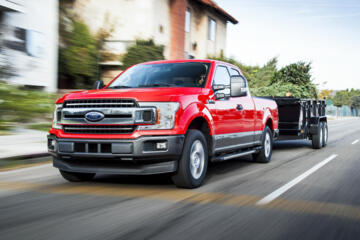
Insurance costs vary wildly by model. The Ford F-150 is often cheaper to insure than its rivals because its aluminum body—once feared to be expensive to fix—is now handled by almost every major body shop, and parts are incredibly common. Tools like the NHTSA safety ratings impact your premiums; higher safety scores translate to lower monthly outflows over a decade.
Hybridization and Fuel
For urban contractors, the Ford Maverick Hybrid has changed the math. Delivering an EPA-estimated 42 mpg in the city, it saves roughly $1,200 annually in fuel compared to a standard mid-size truck. Over ten years, that is $12,000 in direct savings, which covers a significant portion of the vehicle's initial purchase price of approximately $25,000.
Fleet-Spec Trim Strategy
Buying "Work Truck" (WT) or "Tradesman" trims is a pro move. These models use vinyl flooring and manual seats. While less comfortable, they are incredibly durable and easy to clean. From a TCO perspective, you aren't paying for electronic seat motors or sunroof seals that will inevitably leak or fail, costing $1,000+ in labor at a dealership like AutoNation.
Real-World Cases
Case Study 1: The Landscaping Contractor
A small firm in Ohio transitioned from used V8 heavy-duty trucks to a fleet of three Ford Maverick hybrids. Problem: Fuel costs were eating 15% of gross revenue.
Action: Switched to compact hybrids for quoting and light hauling.
Result: Annual fuel spend dropped by 55%, and insurance premiums decreased by 12%. Total savings over 3 years: $34,000.
Case Study 2: The Long-Distance Hauler
An independent contractor chose a Chevrolet Silverado 1500 with the 3.0L Duramax diesel for long-range towing. Problem: High initial cost vs. potential fuel savings.
Action: Strictly followed the Oil Life Monitoring System and used high-quality additives.
Result: The truck achieved 28 mpg highway. Despite the $2,500 diesel premium, the owner broke even in just 22 months due to high mileage (30k/year).
Vehicle Comparison
| Model | 5-Year Depreciation | Running Costs (Fuel/Maint) | TCO Rank |
|---|---|---|---|
| Toyota Tacoma | 20% - 24% | $550 / 22 MPG avg | 1st (Resale) |
| Ford Maverick | 28% - 32% | $480 / 37 MPG avg | 1st (Fuel) |
| Chevrolet Colorado | 35% - 38% | $600 / 21 MPG avg | 3rd (Balanced) |
| Ford F-150 (V6) | 35% - 40% | $750 / 22 MPG avg | 2nd (Utility) |
Avoiding Blunders
The "Modified Truck" trap is the fastest way to destroy TCO. Adding lift kits, oversized tires, and heavy bumpers ruins fuel economy by up to 25% and places immense strain on the transmission and wheel bearings. If you must modify, use OEM-plus parts (like TRD or Z71 accessories) which retain some value during resale.
Another error is ignoring the tire replacement cycle. Heavy trucks eat tires. Choosing a model with 20-inch or 22-inch wheels means you will pay $1,200 to $1,600 for a set of Michelin or Bridgestone tires. Opting for a truck with 17-inch wheels can save you $400 every 40,000 miles.
FAQ
Which truck has the lowest maintenance cost?
The Toyota Tacoma and Ford Maverick generally share this title. The Tacoma benefits from a massive parts ecosystem, while the Maverick’s simpler hybrid eCVT transmission has fewer moving parts than traditional 10-speed automatics.
Does a diesel truck save money long-term?
Only if you drive more than 20,000 miles per year and do significant towing. For the average driver, the higher purchase price, fuel cost, and specialized maintenance make diesel more expensive than gas over 10 years.
How does insurance affect the TCO of a pickup?
Pickups are often cheaper to insure than luxury SUVs because they are perceived as utility vehicles. However, high-performance trims like the Raptor or TRX carry massive premiums that can add $1,000 annually to your costs.
Is it cheaper to buy used or new?
In the current market, used truck prices remain inflated. Often, buying a new truck with a low-interest manufacturer rate (like 1.9% APR from Ford Credit or Toyota Financial) results in a lower monthly cost than a 3-year-old used truck with an 8% interest rate.
What is the "sweet spot" for selling a truck?
To maximize TCO, sell either at the 3-year mark (before major out-of-warranty repairs) or keep it for 10+ years. The worst time to sell is years 5 through 7, when depreciation is high and maintenance needs peak.
Author's Insight
In my fifteen years of tracking automotive data, I’ve found that the "cheapest" truck is rarely the one with the lowest monthly payment. I personally advise clients to look at the Toyota Tacoma not as a vehicle, but as a high-yield savings account on wheels. You pay a premium upfront, but the exit strategy is unmatched. If your daily mileage is high and urban-based, the Ford Maverick is the only logical choice for a healthy bottom line.
Summary
Achieving a low total cost of ownership requires a disciplined approach to vehicle selection. Focus on high-residual models like the Toyota Tacoma, fuel-efficient innovators like the Ford Maverick, or simple, proven powertrains in the Ram 1500 Classic. By avoiding unnecessary modifications and sticking to a rigorous maintenance schedule using quality parts, you can ensure your utility vehicle remains an asset rather than a liability. Prioritize the 10-year outlook over the showroom glitter to keep your long-term expenses at a minimum.