The TCO Reality Check
Most consumers suffer from "sticker price myopia," focusing solely on the monthly loan payment while ignoring the hidden hemorrhaging of cash that occurs through depreciation. In the automotive world, the cheapest car to buy is rarely the cheapest car to own. For example, a sedan with a $22,000 MSRP might lose 50% of its value in three years, while a $25,000 alternative might only lose 30%. Over five years, that $3,000 difference in purchase price is completely eclipsed by the $5,000 difference in resale value.
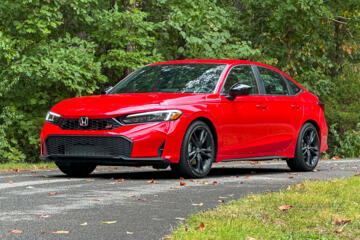
In my decade of tracking fleet data, I’ve seen drivers choose a European subcompact because of a low lease rate, only to be hit with $1,200 brake jobs at year three. Meanwhile, a standard Japanese sedan like the Toyota Corolla or Honda Civic continues to operate on $60 oil changes. Statistics from Kelley Blue Book (KBB) suggest that the average vehicle loses about 40% of its value over five years, but the top performers in the sedan category keep that figure closer to 30%.
Hidden Cost Traps
The biggest mistake is ignoring the "Cost per Mile" metric. People often buy cars based on aesthetics or brand prestige without checking the Consumer Reports reliability ratings for that specific model year. A common pain point is the "Technological Obsolescence" trap—buying a vehicle with a proprietary, non-standard infotainment system or a CVT (Continuously Variable Transmission) known for early failure. When a transmission fails at 70,000 miles, the "savings" from your cheap initial purchase vanish instantly.
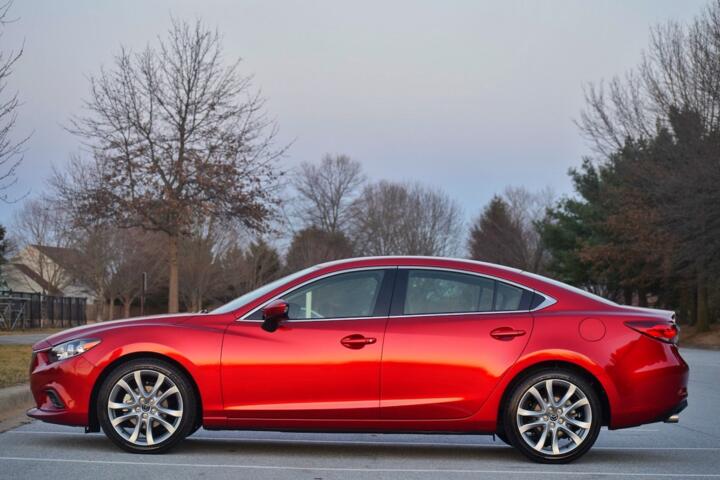
Another critical error is underestimating insurance scaling. A Hyundai Elantra might be affordable at the dealership, but due to high theft rates in specific metropolitan areas (the "Kia Challenge" fallout), insurance premiums can be 40% higher than a comparable Mazda 3. Real-world situations show that a $50 monthly difference in insurance adds $3,000 to your five-year cost. Without checking IIHS safety ratings and theft statistics, you are essentially signing a blank check to your insurance provider.
The Maintenance Math Gap
Maintenance schedules are not created equal. Some budget sedans require synthetic oil every 5,000 miles, while others can go 10,000. Over 75,000 miles (a typical 5-year distance), this is a 100% difference in service frequency. Factor in the cost of proprietary parts versus "aftermarket-friendly" designs, and you see why some brands cost thousands more to keep on the road.
Depreciation: The Silent Killer
Depreciation accounts for nearly 40-50% of total ownership costs. If you buy a sedan that isn't popular in the used market—like certain discontinued domestic models or niche brands—the trade-in value at year five will be abysmal. High-volume, high-reputation cars like the Toyota Camry hold value because there is always a buyer waiting for a used one.
Fuel Efficiency vs. Hybrid Premium
Drivers often overpay for a Hybrid version of a sedan thinking they will save money. If you drive less than 10,000 miles a year, it can take 7–9 years to "break even" on the higher initial cost of the hybrid battery and system. You must calculate your specific mileage to see if the internal combustion engine (ICE) version is actually the smarter financial play.
The Insurance Premium Variance
Insurance companies use actuarial data that penalizes certain "cheap" cars. If a car is frequently involved in accidents or is easy to steal, your premium reflects that risk. Using tools like The Zebra or Insurify before buying can reveal that a slightly more expensive sedan is actually cheaper monthly because of lower risk scoring.
Out-of-Warranty Vulnerability
Most 5-year ownership cycles outlast the 3-year/36,000-mile bumper-to-bumper warranty. If you own a vehicle with poor long-term reliability scores from J.D. Power, the repair costs in years 4 and 5 can exceed the car's remaining equity. Choosing a brand with a 10-year powertrain warranty, like Mitsubishi or Kia, can mitigate this, provided you follow the strict service guidelines.
Ownership Strategies
To win the 5-year game, you must prioritize mechanical simplicity. Look for naturally aspirated engines rather than small-displacement turbocharged ones. Turbochargers add complexity and heat, which leads to gasket failures and cooling issues over time. A Toyota Corolla with a 2.0L dynamic force engine is a prime example of high-efficiency simplicity that avoids these pitfalls.
Utilize the "Pre-Owned Sweet Spot." Instead of buying brand new, find a "Certified Pre-Owned" (CPO) sedan that is 2 years old with 20,000 miles. The first owner has already eaten the 20-25% "drive-off-the-lot" depreciation. By holding this car for 5 years, your average annual depreciation cost drops significantly. Services like CarEdge provide excellent tools to visualize these depreciation curves before you commit to a purchase.
Standardize your maintenance. Stick to independent shops with high ratings on RepairPal rather than dealership service bays. Dealerships often have a 50-100% markup on labor and parts. By using an independent specialist for a Honda Civic, you can save roughly $1,500 over five years. Always keep a digital log of your receipts (using apps like CARFAX Car Care) to maximize your resale value when it’s time to sell.
Top Value Sedans
| Model Name | 5-Year Depreciation (%) |
Est. Maintenance (5yr) |
Best Feature for Savings |
|---|---|---|---|
| Toyota Corolla | 28% | $2,100 | High Resale / Low Parts Cost |
| Honda Civic | 31% | $2,400 | Fuel Efficiency / Durability |
| Mazda 3 | 38% | $2,800 | Premium Interior / No CVT |
| Hyundai Elantra | 42% | $2,200 | Industry-Leading Warranty |
| Subaru Impreza | 35% | $3,200 | Standard AWD Resale Value |
Ownership Case Studies
Case Study 1: The Fleet Manager's Choice
A small delivery firm in Chicago shifted from using various domestic sedans to a uniform fleet of Toyota Corolla LEs. Initially, the domestic cars were $2,000 cheaper per unit. However, after 5 years and 100,000 miles, the Corollas had required 30% less unscheduled maintenance. More importantly, when the firm liquidates the fleet, the Corollas sold for $5,500 more per unit than the domestic alternatives. Net gain: $3,500 per vehicle.
Case Study 2: The Commuter's Insurance Pivot
An individual in Los Angeles was considering a used Kia Forte due to its low price. Upon running an insurance quote, they found the premium was $210/month. They compared this to a Mazda 3, which had a slightly higher purchase price but an insurance premium of only $135/month. Over 5 years, the Mazda saved the driver $4,500 in insurance alone, making it the significantly cheaper car to own despite the higher "price tag."
Mistakes to Avoid
Never skip the "Pre-Purchase Inspection" (PPI) on a used sedan. Even a "reliable" model like a Civic can be a money pit if the previous owner neglected oil changes or drove through floodwaters. A $150 inspection by a mobile mechanic can save you from a $4,000 engine replacement. Avoid "long-term" 84-month loans. These loans keep you "underwater" (owing more than the car is worth) for almost the entire five-year period, destroying your ability to trade in the vehicle if your financial situation changes.
Stop buying "add-ons" in the F&I (Finance and Insurance) office. Nitrogen-filled tires, VIN etching, and third-party paint protection are high-margin products that offer zero return on investment for a budget sedan. If you want an extended warranty, buy it directly from the manufacturer (e.g., Honda Care) rather than a third-party provider, which often denies claims for "wear and tear."
FAQ
Is a used luxury sedan cheaper because of depreciation?
No. While a used BMW 3-series might cost the same as a new Corolla, the maintenance and parts for the luxury brand remain at "luxury prices," often 3x higher than economy brands.
Does color affect the cost of ownership?
Indirectly, yes. Silver, white, and black cars have higher resale value because they appeal to a broader market. Unusual colors can sit on the market longer and sell for less.
Should I always go for the smallest engine?
Not necessarily. If a small engine has to work too hard to move the car, it may wear out faster and get worse real-world gas mileage than a slightly larger, unstressed engine.
How much does a CVT transmission affect long-term cost?
Modern CVTs (like those in Toyota or Honda) are reliable, but some older designs (like early Nissan units) are prone to failure. Research the specific generation before buying.
Is DIY maintenance worth it?
For simple tasks like air filters and oil changes, yes. It can save you $200-$400 annually and ensures you are using high-quality fluids.
Author’s Insight
I have spent years analyzing residual value data, and my biggest takeaway is that the "cheapest" car is the one people still want ten years from now. I always tell my clients to look at the cars parked in high-mileage taxi ranks or used by long-distance couriers. They don't use those models by accident; they use them because the cost-per-mile is mathematically superior. If you want to save money, ignore the gadgets and buy the mechanical "boring" option—your bank account will thank you in year five.
Summary
To minimize your five-year ownership costs, you must shift your focus from the purchase price to the "exit price" and operational expenses. Stick to high-volume Japanese sedans with naturally aspirated engines, verify insurance rates before signing, and avoid the trap of long-term high-interest financing. By choosing a vehicle like a Corolla or Civic and maintaining it through reputable independent shops, you ensure that your mobility remains affordable. The smartest automotive investment isn't the flashiest one; it's the one that