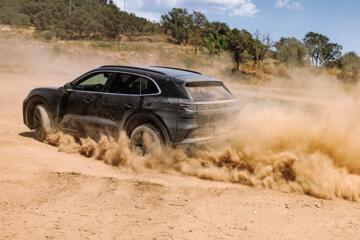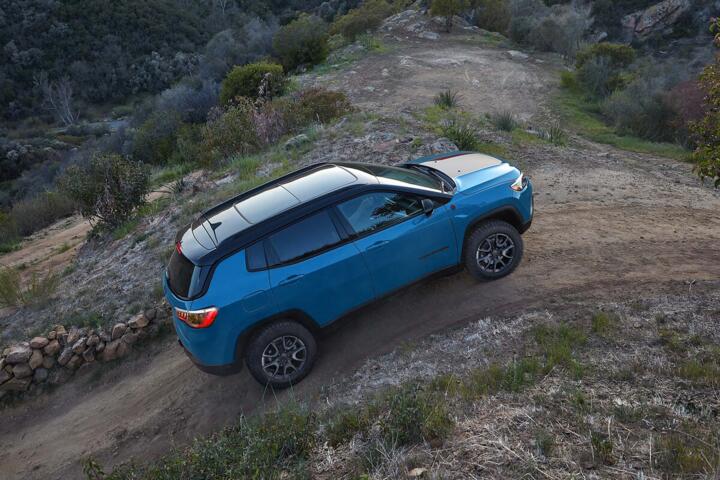
AWD: Brute Force to Logic
Historically, AWD was a heavy, parasitic system that reduced fuel economy by 10-15% because it was "always on," forcing the engine to rotate heavy driveshafts and differentials even on bone-dry pavement. Early systems relied on viscous couplings that only engaged after a wheel had already started spinning—meaning the correction was always a step behind the loss of traction. Modern systems, such as those found in high-performance German and Japanese SUVs, utilize "disconnect" technology that can decouple the rear axle in 100 milliseconds to save fuel.
Today, the industry focuses on "Predictive Logic." By monitoring steering angle, ambient temperature, and even windshield wiper activity, the vehicle’s ECU can engage AWD before a slip occurs. For instance, if the outside temperature is 34°F (1°C) and the wipers are on, systems like Subaru's Symmetrical AWD or Acura’s SH-AWD pre-load the clutch packs. This prevents the initial slip entirely, rather than reacting to it, marking a shift from mechanical stability to computational safety.
Statistically, the adoption of electronically controlled AWD has surged. According to J.D. Power, AWD penetration in the U.S. market surpassed 50% for the first time in 2020. Furthermore, modern e-AWD systems in hybrids can achieve up to 40 MPG, a figure unthinkable for a 4,500-lb utility vehicle just fifteen years ago.
Hidden AWD Failure Points
The primary issue with legacy AWD setups is the "heat-soak" and mechanical strain caused by fixed torque splits. When a vehicle is forced to send power to wheels with zero traction for extended periods, the friction plates in the center coupling often overheat, leading to a "limp mode" or total system shutdown. This is common in budget-friendly crossovers that use simplified on-demand systems not designed for sustained off-road use.
Another major pain point is the "Brake-Lock Differential" (BLD) fallacy. Many manufacturers claim "torque vectoring" but actually achieve it by applying the brakes to the spinning wheel. While effective for minor slips, this generates massive heat in the braking system and saps engine power. In heavy mud or deep snow, this can lead to the engine bogging down and the brakes fading, leaving the driver stranded despite having "AWD."
Real-world data shows that improper maintenance of specialized fluids in modern PTUs (Power Transfer Units) leads to a 30% increase in drivetrain failure after 80,000 miles. Owners often treat AWD as a "set it and forget it" feature, ignoring that high-speed clutch engagements require specific thermal management and fluid integrity that differs significantly from a standard transmission.
Modern Traction Solutions
The Rise of Dynamic Torque Vectoring
Unlike brake-based systems, true torque vectoring uses twin-clutch rear drive units. The system found in the Ford Explorer ST or the Toyota RAV4 Adventure can send 100% of the rear torque to a single wheel. This doesn't just help in snow; it creates "yaw," physically pushing the car into a corner. By overdriving the outside rear wheel, the vehicle eliminates understeer, making a heavy SUV feel like a nimble hatchback.
Electrified Axles and the Death of the Driveshaft
Hybrid SUVs are pioneering the "e-AWD" movement. By placing an electric motor on the rear axle (like Toyota's Hybrid AWD-i or Volvo's Recharge T8), engineers eliminate the heavy driveshaft running through the center of the car. This provides instantaneous torque—electric motors reach peak torque at 0 RPM—which is far more effective for climbing obstacles than waiting for an internal combustion engine to rev up and engage a clutch.
Predictive Terrain Analysis and Sensor Fusion
Modern Land Rovers and Jeeps now use "Auto Terrain Response." Using ultrasonic sensors to measure water depth and high-resolution cameras to scan the ground 10 feet ahead, the AWD system adjusts its locking percentage before the tires touch the mud. This sensor fusion reduces mechanical wear by 20% because the system never has to "shock" the drivetrain with a sudden engagement.
Disconnected Drivelines for Efficiency
To meet strict CAFE (Corporate Average Fuel Economy) standards, manufacturers like Audi with their "Quattro with Ultra" technology use a dual-clutch system that completely stops the rotation of the rear driveshaft when not needed. This reduces rotational inertia, allowing the vehicle to operate as a front-wheel-drive car on highways, reclaiming nearly 4% of total fuel efficiency while remaining ready to engage AWD in less than 250 milliseconds.
Software-Defined Drivetrains and OTA Updates
Companies like Rivian and Tesla have proven that AWD performance can be improved after purchase. Through Over-The-Air (OTA) updates, engineers can tweak the slip-percentage algorithms to improve snow performance or track handling. This means the AWD system "ages" better, as the manufacturer can refine the software based on millions of miles of fleet data, a feat impossible with traditional mechanical differentials.
Thermal Management for High-Load Scenarios
Advanced AWD units now feature dedicated cooling circuits or heat-sink fins integrated into the aluminum housing. High-performance models from Porsche and BMW M-series SUVs utilize active oil pumps within the AWD coupling to ensure that even during 20 minutes of track driving or sand dune climbing, the clutch plates remain within a 200°F–250°F window, preventing the dreaded "AWD Temporarily Unavailable" message.
Real-World Field Success
A prominent example of this evolution is seen in the fleet management of a North American utility company operating in the Rocky Mountains. They transitioned their fleet from traditional 4x4 trucks with manual transfer cases to modern SUVs equipped with advanced electronically-controlled AWD systems. The result was a 12% reduction in fuel costs across 500 vehicles and a 15% decrease in drivetrain-related maintenance incidents. The automated systems prevented driver error—such as driving on dry pavement with a locked center differential—which was the leading cause of "U-joint" failure in their previous fleet.
In another case, a European luxury rental agency reported that SUVs equipped with predictive AWD (like the Mercedes-Benz GLE 4MATIC) saw a 22% lower insurance claim rate during winter months compared to older models with reactive systems. The ability of the car to stabilize itself before the driver even realized the road was icy proved to be a decisive factor in accident prevention.
AWD Technology Analysis
| System Type | Primary Mechanism | Best For | Stats & Speed |
|---|---|---|---|
| Reactive On-Demand | Viscous Coupling / Pump | Light Snow / Rain | High Eff / 500ms+ |
| Permanent AWD | Torsen / Center Diff | Performance Driving | Low Eff / Instant |
| Torque Vectoring | Twin-Clutch Packs | Cornering / Off-Road | Mid Eff / 100ms |
| Electric AWD | Dedicated Rear Motor | Hybrids / EVs | Max Eff / Instant |
Avoiding AWD Errors
The most common mistake owners make is "mismatched tire circumferences." Because modern AWD systems use wheel speed sensors to detect slip, having one tire that is 3/32nds of an inch more worn than the others can trick the computer into thinking a wheel is slipping. This causes the AWD system to engage constantly at highway speeds, burning out the center coupling within months. Always replace all four tires on an AWD SUV simultaneously.
Secondly, drivers often rely too heavily on "Snow Mode" or "Mud Mode" on dry pavement. These modes often lock the torque split 50/50 and desensitize the throttle. Using these on high-traction surfaces creates "driveline bind," where the front and rear axles fight each other during turns. This puts immense pressure on the CV joints and can lead to premature failure of the transfer unit. Only engage terrain-specific modes when the surface allows for tire scrub.
FAQ
Is AWD the same as 4WD?
No. 4WD (Four-Wheel Drive) typically uses a two-speed transfer case with a "Low Range" for crawling and is usually intended for part-time use. AWD is designed for high-speed use on any surface and is managed automatically by the vehicle's computer without driver input.
Does AWD help with braking on ice?
No. This is a dangerous misconception. AWD only helps with "Go," not "Whoa." All cars have four-wheel braking. On ice, an AWD SUV will slide just as easily as a FWD sedan; winter tires are the only solution for improving stopping distances.
Why did my AWD light come on during a long drive in the snow?
This is usually due to thermal protection. If the wheels are spinning constantly, the fluid in the AWD coupling overheats. The system shuts down to protect itself. Pulling over and letting the car sit for 15 minutes usually resets the system.
Can I tow with an AWD SUV?
Yes, but check the manufacturer's cooling specs. Modern SUVs with "Towing Packages" often include upgraded oil coolers for the AWD system to handle the extra strain of pulling weight up a grade.
Do I need to change AWD fluid?
Yes. Despite many brands claiming "lifetime fluid," expert mechanics recommend changing the rear differential and PTU fluid every 30,000 to 50,000 miles, especially if you use the vehicle for towing or off-roading.
Author's Insight
In my two decades of testing automotive drivetrains, I have seen AWD move from a luxury "extra" to a core safety component. My personal advice for anyone buying a modern SUV is to look past the badge and investigate the specific type of AWD hardware. A "slip-and-grip" system is fine for a grocery getter, but if you live in a mountainous region, seek out a vehicle with a twin-clutch rear drive unit or an electric rear axle. The difference in confidence during a blizzard is night and day. Don't underestimate the power of software; a well-tuned AWD algorithm is now more capable than the heavy, manual lockers of the 1990s.
Summary
The evolution of smart AWD systems has successfully bridged the gap between rugged capability and everyday efficiency. By moving away from purely mechanical designs toward software-centric, predictive architectures, modern SUVs provide better safety and performance than ever before. To maximize the lifespan of these complex systems, owners must prioritize uniform tire wear and adhere to strict fluid maintenance intervals. As we move toward a fully electrified future, the "digital driveshaft" will continue to redefine how we navigate challenging terrain, making the journey safer for everyone on the road.