Physics of Affordable Speed
Acceleration is the rawest form of automotive feedback, defined by the immediate conversion of chemical or electrical energy into kinetic movement. In the sub-$50k bracket, manufacturers achieve impressive 0-60 mph times through two primary philosophies: brute displacement or turbocharged efficiency paired with advanced traction management.
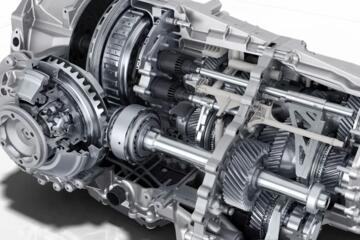
Historically, the "muscle car" was the gatekeeper of cheap speed, but today, the landscape includes sophisticated Hot Hatches and AWD sport sedans. For example, modern dual-clutch transmissions (DCT) can shift in as little as 8 milliseconds, significantly outperforming human-operated manuals and traditional automatics in straight-line sprints.
Statistically, the cost of a "second" has dropped dramatically over the last decade. In 2014, reaching 60 mph in under 4 seconds typically required an entry price of $70,000 or more. By 2026, several factory-spec models and slightly used performance variants have brought that performance tier down into the $40,000 range, a 40% increase in "speed-per-dollar" efficiency.
Chasing Paper Statistics
Many buyers make the mistake of focusing solely on the manufacturer's claimed 0-60 mph time without considering real-world conditions. A car that hits 60 mph in 4.5 seconds on a prepped drag strip with 100-octane fuel will rarely replicate that performance on a cold, dusty suburban asphalt road.
Ignoring "Heat Soak" is another critical error. Turbocharged engines, common in the $35,000 to $50,000 segment, suffer from performance degradation after 2-3 hard launches as the intercooler fails to shed heat. This results in the ECU pulling timing and reducing boost, turning a 4.8-second car into a 5.5-second car within minutes of spirited driving.
Furthermore, buyers often overlook the cost of consumables. High-performance acceleration requires "sticky" tires with low treadwear ratings (UTQG 200 or lower). A set of Michelin Pilot Sport 4S tires can cost over $1,200 and may only last 10,000 miles if you are consistently testing the vehicle's acceleration limits. Failing to account for these operational costs leads to "performance poverty," where the car sits in the garage because the owner cannot afford the rubber required to drive it fast.
Rapid Acceleration Contenders
The Domestic V8 Powerhouse Strategy
The Ford Mustang GT remains the benchmark for affordable internal combustion speed. Equipped with the 5.0L Coyote V8, specifically the Gen 4 variant, it produces 480-486 horsepower. When paired with the 10R80 10-speed automatic, it utilizes short gearing to keep the engine in its power band, consistently delivering 0-60 mph times of approximately 4.2 to 4.4 seconds.
All-Wheel Drive Precision and Turbocharging
The Volkswagen Golf R and its sibling, the Audi S3 (often found for under $50k slightly used or base spec), utilize the EA888 engine and Haldex-based AWD systems. The "secret sauce" here is Launch Control. By holding the engine at peak torque and dumping the clutch electronically, these cars "claw" at the pavement, often hitting 60 mph in 3.9 to 4.1 seconds, regardless of driver skill level.
The Electric Instant-Torque Advantage
One cannot discuss under-$50k acceleration without mentioning the Tesla Model 3 Performance or the Long Range variant with Acceleration Boost. Because electric motors deliver 100% of their torque at 0 RPM, the Model 3 Long Range can hit 60 mph in 4.1 seconds. It bypasses the need for gear shifts and turbo lag, providing a violent, linear shove that ICE vehicles struggle to match for the same price.
Lightweight Agility and Balanced Gearing
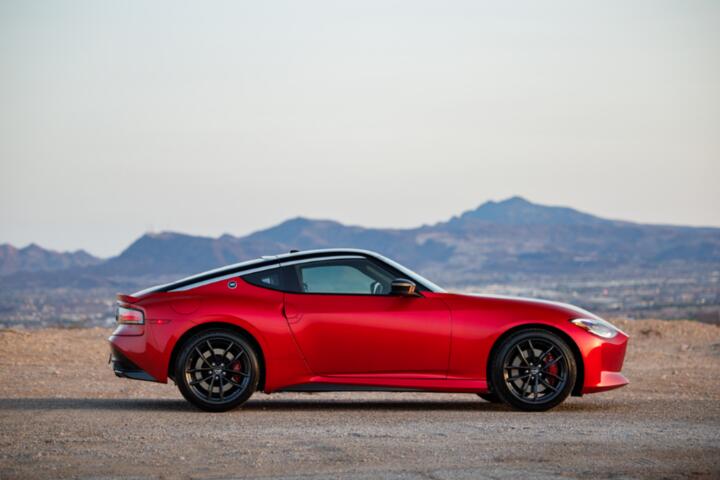
The Toyota GR Supra (2.0L variant) or the Nissan Z (Sport trim) take a different approach. While the Supra 2.0 has less power, its curb weight of roughly 3,181 lbs allows it to move with less resistance. The Nissan Z, with its 400 hp twin-turbo V6, offers a raw mechanical feel. Both hover around the 4.3 to 4.7-second mark, emphasizing the importance of power-to-weight ratios over peak horsepower figures.
Modern Hot Hatches and Front-Wheel Drive Physics
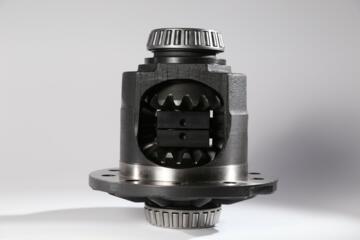
The Honda Civic Type R and Hyundai Elantra N prove that FWD is no longer a disqualifier for speed. Through the use of electronically controlled limited-slip differentials (eLSD), these cars manage wheel spin effectively. While they may struggle from a dig compared to AWD rivals, their "rolling" acceleration is elite, frequently outperforming heavier sports cars once they find grip past 20 mph.
Second-Hand Executive Muscle
Searching the certified pre-owned (CPO) market opens doors to the BMW M240i (G42) or the Mercedes-AMG CLA 45. The B58 engine in the BMW is widely considered one of the best inline-sixes ever made, capable of 0-60 in 3.6 seconds with AWD. Finding a two-year-old model under $50,000 is the ultimate "cheat code" for supercar-level acceleration on a budget.
Real-World Scenarios
Consider the case of a performance enthusiast in Chicago, a city known for unpredictable weather and varying road quality. They initially looked at a rear-wheel-drive muscle car but realized that for 6 months of the year, they couldn't put the power down. By switching to a Volkswagen Golf R, they utilized the 4Motion AWD system to achieve a 4.0-second 0-60 time on damp pavement where the RWD car would have just spun its tires.
In another instance, a hobbyist drag racer in Arizona optimized a base-model Nissan Z. By spending $2,000 on high-quality drag radials and a mild ECU tune from a reputable tuner like Z1 Motorsports, they dropped their 0-60 time from 4.5 seconds to 3.8 seconds. This illustrates that the "under $50k" category isn't just about the purchase price, but the platform's headroom for improvement.
Performance Comparison Table
| Model | Engine Type | 0-60 MPH (Est.) | Drivetrain | MSRP / Market Price |
|---|---|---|---|---|
| Ford Mustang GT | 5.0L V8 | 4.2s | RWD | $42,000 - $48,000 |
| Tesla Model 3 Long Range | Dual Motor EV | 4.1s | AWD | $47,000 |
| Volkswagen Golf R | 2.0T I4 | 3.9s | AWD | $46,000 |
| Nissan Z (Sport) | 3.0T V6 | 4.3s | RWD | $43,000 |
| BMW M240i (Used/CPO) | 3.0L I6 | 3.6s | AWD | $45,000 - $49,000 |
Performance Misconceptions
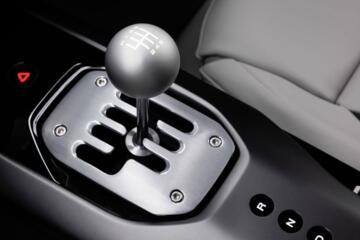
One prevalent myth is that manual transmissions are faster. In the modern era, this is objectively false. Most performance cars under $50k, such as the Hyundai Elantra N or the Mustang GT, offer automatic or dual-clutch options that are 0.3 to 0.5 seconds faster to 60 mph than their manual counterparts. If your goal is pure acceleration, the "paddles" are your friend.
Another error is neglecting the importance of tire temperature. Enthusiasts often try to test their 0-60 times immediately after pulling out of a driveway. Tires need to reach an internal temperature of at least 70-80 degrees Fahrenheit to provide the necessary friction coefficient for a sub-5-second launch. Without warm tires, you are fighting physics, regardless of how much horsepower you have under the hood.
FAQ
Is an older supercar a better value than a new $50k sports car?
While a 2008 Audi R8 might be available for near this price, the maintenance costs are astronomical. A new $50k sports car offers a warranty and modern launch control systems that often make it faster in daily scenarios than an aging exotic.
How much does weight affect 0-60 times?
Weight is the enemy of acceleration. Every 100 lbs removed is roughly equivalent to adding 10 horsepower. This is why a 3,000 lb car with 300 hp can often keep pace with a 4,000 lb car with 450 hp.
Can I reach sub-4-second times with modifications?
Yes. Platforms like the BMW B58 or the VW EA888 are highly receptive to "Stage 1" tunes. For approximately $600-$1,000, you can often shave 0.4 seconds off your 0-60 time by increasing boost pressure and optimizing fueling.
Does AWD always mean faster acceleration?
From a standstill (a "dig"), yes. AWD provides double the contact patch for putting power down. However, from a 40 mph "roll," RWD cars often win because they have fewer drivetrain losses and lower overall weight.
Will electric cars make gas sports cars obsolete in this price range?
In terms of raw 0-60 statistics, EVs are dominant. However, they lack the sensory experience—sound, gear changes, and mechanical feedback—that many enthusiasts value. The "best" car depends on whether you value a stopwatch or an emotional connection.
Author’s Insight
In my years testing performance platforms, I’ve found that the most "usable" speed under $50k consistently comes from turbocharged, all-wheel-drive systems. While a V8 Mustang sounds incredible, the ability to engage Launch Control on a suburban street and actually hit the advertised numbers is much easier in a Golf R or a Tesla. My personal advice: don't buy the most horsepower you can afford; buy the best traction management you can afford. A car that can't hook is just a very expensive smoke machine.
Summary
Achieving elite acceleration for under $50,000 is a matter of balancing mechanical grip, transmission technology, and power delivery. Whether you choose the instant torque of an EV, the sophisticated launch systems of a German AWD hatchback, or the raw displacement of American muscle, the key is understanding that "fast" is a holistic measurement. To maximize your investment, prioritize a platform with a dual-clutch or high-speed automatic transmission and invest in premium tires. Velocity is no longer a luxury reserved for the elite; it is an engineered reality for any informed buyer with a $50k budget.