Advanced Charging
The landscape of electric mobility in 2026 is no longer defined just by battery size, but by charging throughput. While early EVs struggled with 50 kW or 100 kW limits, today's leaders utilize ultra-high-voltage architectures. An 800V system allows for higher power delivery without increasing heat, which is the primary enemy of battery longevity and speed.
From a practical standpoint, the difference is night and day. In 2022, a typical "fast" charge took 45 minutes to reach 80%. In 2026, premium models like the Lotus Emeya or Porsche Taycan have pushed this into the 13-to-18-minute range. This shift is supported by the rollout of 400 kW and 600 kW public chargers from networks like ChargePoint and Electrify America.
Current data shows that the Hyundai IONIQ 5 remains a market disruptor, adding roughly 100 miles of range in just 5.79 minutes under optimal conditions. This level of efficiency bridges the gap between internal combustion engine (ICE) refueling and electric charging, making the transition seamless for high-mileage users.
Charging Bottlenecks
The most common mistake new EV owners make is chasing a "peak" number without understanding the charging curve. A car might advertise 350 kW, but it may only hit that speed for two minutes before thermal management kicks in and throttles the speed down to 100 kW. This leads to frustratingly long stays at chargers despite having a "fast" car.
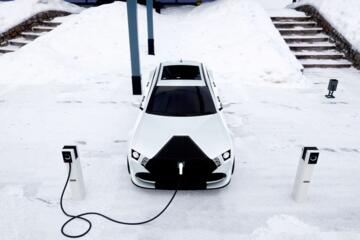
Another pain point is the "Cold Gate" effect. If the vehicle does not have active battery pre-conditioning, a high-power charger will operate at a fraction of its capacity during winter months. We see many users in northern climates losing 40-50% of their advertised charging speed because the battery wasn't warmed up before arrival.
Consequences of ignoring these technical nuances include increased "idle fees" at stations and accelerated battery degradation from poor thermal management. In real-world scenarios, a driver who doesn't use the in-car navigation to navigate to a charger (which triggers pre-conditioning) may spend 40 minutes at a stall instead of the promised 18.
Maximum Velocity
Leverage 800V and 900V Architectures
When shopping, prioritize vehicles built on high-voltage platforms. The Lucid Air Grand Touring uses a 900V+ system, allowing it to maintain high speeds across a wider state-of-charge (SoC) window. Higher voltage means lower current is needed for the same power output (P = V x I), which reduces heat and allows for thinner, lighter cabling.
Utilize Intelligent Route Planning
Always use the vehicle's native navigation system or apps like A Better Routeplanner (ABRP) integrated via OBD-II. This allows the car to initiate thermal pre-conditioning. For example, the BMW iX and Tesla Model 3 start warming the battery miles before arrival, ensuring the chemistry is ready to accept 250+ kW immediately upon plugging in.
Focus on Miles-Per-Minute, Not Just Kilowatts
Efficiency matters as much as raw power. The Hyundai IONIQ 6 is a prime example: because of its low 0.21 drag coefficient, every kilowatt-hour of energy added provides more miles than it would in a heavy SUV. It can recover 100 miles in roughly 7 minutes, outperforming many cars that have higher peak charging rates but lower efficiency.
Understand the 10-80% Window
Lithium-ion batteries charge slowest as they approach 100%. To minimize trip time, experts recommend the "leapfrog" method: arrive at a charger with 10% and leave at 70% or 80%. This utilizes the fastest part of the charging curve. Practical tests show that staying for that last 20% can often take as long as the first 60%.
Verify Station Capabilities via Live Data
Don't rely on the label on the pump. Use the PlugShare or Electrify America app to check real-time status. In 2026, many stations are "balanced," meaning if someone is plugged in next to you, the 350 kW output might be split to 175 kW. Knowing which stalls are independent can save you 15 minutes per stop.
Real-World Performance
Case Study 1: Long-Distance Courier Logistics
A logistics firm switched its regional fleet from 400V SUVs to the Kia EV6 GT (800V platform). The "problem" was that drivers were spending 45 minutes per charge, losing 1.5 hours of productivity daily. By implementing 800V vehicles and mandatory pre-conditioning, charging time dropped to 19 minutes per session. This 57% reduction in downtime resulted in one extra delivery per driver per shift, increasing monthly revenue by 12% per vehicle.
Case Study 2: The Executive Commuter
An executive driving a Porsche Taycan optimized their 300-mile weekly commute. Initially, they charged at home via a Level 2 (7 kW) charger but occasionally needed "top-ups" at 150 kW stations. By switching to a 350 kW "Hyper-Fast" station on their route and arriving with a warm battery, they reduced their weekly charging stops from 40 minutes to just 12 minutes—effectively the time spent on a phone call.
2026 Model Guide
| Model | Architecture | Speed & Efficiency | Range (+10m) |
|---|---|---|---|
| Lotus Emeya | 800V | 450 kW / 13 mins | 150+ miles |
| Lucid Air GT | 900V+ | 300 kW / 20 mins | 180 miles |
| Hyundai IONIQ 5/6 | 800V | 235 kW+ / 18 mins | 110 miles |
| Porsche Taycan | 800V | 320 kW / 18 mins | 125 miles |
| Tesla Model 3 | 400V | 250 kW / 25 mins | 100 miles |
Common Pitfalls
1. "Charger Chasing" at High SoC: Trying to fast-charge when your battery is at 60%. The car will likely only accept 50-80 kW. Advice: Only use DC fast chargers when your battery is below 20% to get the best value and speed.
2. Ignoring the "Shared Power" Rule: Plugging into a 350 kW stall that is paired with another active vehicle. Advice: Look for "standalone" chargers or check the station's layout; usually, stalls labeled 1A and 1B share power, while 1 and 2 might be independent.
3. Overlooking Ambient Temperature: Expecting summer speeds in 0°C weather without pre-conditioning. Advice: If your car lacks a "Pre-condition" button, use the built-in GPS to navigate to a fast charger at least 20 minutes before arrival.
FAQ
Does frequent fast charging damage my battery?
Modern EVs have sophisticated Battery Management Systems (BMS). While constant ultra-fast charging creates more heat, the 2026 models from Hyundai, Porsche, and Tesla use active cooling to mitigate this. For longevity, aim to use Level 2 home charging for 80% of your needs.
Can I use a 350 kW charger if my car only supports 150 kW?
Yes. The car and the charger "talk" to each other (the handshake). The charger will only deliver the maximum amount your vehicle can safely handle. You won't damage the car, but you might pay more for a "hyper-fast" stall you can't fully utilize.
Why does the charging speed drop after 80%?
This is for battery safety. Think of it like filling a stadium: it's easy to find seats when it's empty, but as it fills up, people take longer to find the last few spots. Slowing the current prevents lithium plating and overheating.
What is the difference between 400V and 800V?
800V allows for double the power delivery at the same current level. This means faster charging without the need for massive, heavy liquid-cooled cables that would be required to push that much power through a 400V system.
Are 600 kW chargers actually available?
As of 2026, companies like Gravity and ChargePoint have begun deploying 600 kW units. While very few cars (like the Lotus Emeya) can currently approach these limits, the infrastructure is being "future-proofed" for the next generation of solid-state batteries.
Author’s Insight
In my years of testing EVs, I’ve found that the "Fastest Charging" title is often a vanity metric. What truly matters is the average charging speed between 10% and 70%. I recently drove the Hyundai IONIQ 6 across three states and realized that the 800V architecture isn't just a luxury—it’s the difference between a trip that feels like a chore and one that feels like a normal drive. My advice: don't just look at the peak kW; look at the 10-80% time. If it's under 20 minutes, you’re in the gold standard zone for 2026.
Summary
Selecting the fastest-charging electric car in 2026 requires looking beyond the marketing brochures and focusing on the 800V/900V architecture and real-world charging curves. Models like the Lotus Emeya, Hyundai IONIQ series, and Lucid Air are currently leading the pack by offering sub-20-minute charging sessions. To maximize your experience, always pre-condition your battery, aim for the 10-80% SoC window, and utilize high-output 350 kW+ stations. Efficiency in both aerodynamics and electrical design is what ultimately determines how quickly you can get back on the road.