Myth of Fragility
Reliability in the sports car world isn't about never needing a wrench; it is about predictable wear versus catastrophic mechanical failure. Historically, high-strung engines were prone to cooling issues or premature bearing wear, but modern CAD (Computer-Aided Design) and metallurgy have shifted the landscape. Many contemporary performance engines are now derived from high-volume production blocks that have been reinforced, meaning they benefit from millions of miles of real-world testing.
Consider the Porsche 911 (991 and 992 generations) or the Mazda MX-5 Miata. While they sit at opposite ends of the price spectrum, both consistently rank high in J.D. Power Dependability Studies. In fact, according to iSeeCars data, the Porsche 911 is one of the most likely sports cars to reach 200,000 miles. This isn't accidental; it’s the result of rigorous thermal management and a "track-ready" philosophy that assumes the car will be pushed to its limits regularly.
Real-world data from Consumer Reports often places the Mazda MX-5 and the Subaru BRZ/Toyota GR86 twins at the top of the sports car reliability segment. These vehicles use naturally aspirated engines with relatively low stress-per-liter ratios compared to turbocharged rivals. By avoiding the extreme heat cycles of heavy turbocharging, these platforms maintain seal integrity and oil quality for significantly longer durations under aggressive driving conditions.
High Cost of Neglect
The most common mistake owners make is applying "commuter car" maintenance intervals to "performance" machinery. Using a standard 10,000-mile oil change interval on a car frequently driven near its redline is a recipe for internal scoring. Sports cars operate at higher temperatures and pressures; ignoring these physics leads to the dreaded "death by a thousand heat cycles," where gaskets brittle and plastic cooling components fail prematurely.
Another major pain point is the "deferred maintenance" trap found in the used market. A buyer might find a high-mileage German coupe for a bargain price, only to discover that the previous owner skipped the $2,000 transaxle service or the $1,500 spark plug and coil pack replacement. In high-performance vehicles, a single failing sensor can trigger a "limp mode" that ruins the driving experience and potentially masks more serious mechanical issues.
Failure to warm up the oil before spirited driving is a silent killer. Many owners don't realize that coolant temperature reaches its operating range much faster than oil. Putting a heavy load on an engine when the oil is still thick leads to accelerated wear on rod bearings and cam lobes. Over time, this manifests as metallic debris in the oil filter, signaling an imminent and expensive engine rebuild that could have been avoided with five minutes of patience.
Ownership Strategy
Prioritize Over-Engineered Platforms
Seek out vehicles with "over-built" components, such as the B58 inline-six engine found in the BMW M240i and Toyota Supra. This engine uses a closed-deck block design, which provides superior structural rigidity compared to open-deck designs. On the street, this means the engine is operating far below its theoretical breaking point, resulting in exceptional longevity even when tuned.
Advanced Thermal Management
Heat is the enemy of reliability. Reliable sports cars like the Chevrolet Corvette (C7/C8) utilize massive radiators and dedicated oil coolers. If you plan on tracking your car, installing an aftermarket oil cooler or a high-capacity aluminum radiator (like those from Mishimoto or CSF) can extend the life of your engine seals by keeping peak temperatures 20-30 degrees lower during hard runs.
Strict Fluid Analysis Protocols
Don't just change your oil; analyze it. Services like Blackstone Laboratories allow you to send in a sample of used oil to check for traces of copper, lead, or aluminum. This data acts as an "MRI" for your engine, catching bearing wear before a catastrophic failure. For $35, you get a scientific report that confirms whether your 5,000-mile interval is sufficient or if you need to adjust your driving habits.
Rubber and Plastic Proactive Replacement
In cars like the Porsche Boxster or BMW Z4, the cooling system's plastic expansion tanks and rubber hoses are known "wear items" that usually fail around the 80,000-mile mark. Instead of waiting for a leak, replace the entire cooling stack at 70,000 miles. This proactive approach costs roughly $800 in parts but prevents a $5,000 head gasket failure caused by sudden overheating.
Transmission Longevity Tactics
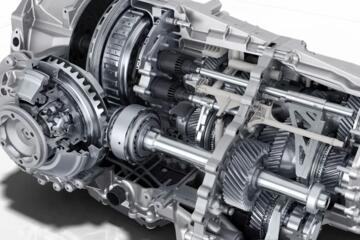
Dual-clutch transmissions (DCTs) like Porsche's PDK or Volkswagen's DSG are marvels of engineering but require strict fluid changes. Neglecting a DSG service (typically every 40k miles) leads to solenoid failure. Following the manufacturer’s "severe service" schedule—rather than the "standard" one—ensures the clutches remain sharp and the electronic mechatronics unit stays cool.
Reliability Wins
Case 1: The High-Mileage Daily Porsche
A California-based enthusiast used a 2014 Porsche 911 Carrera (991.1) as a daily driver, covering 145,000 miles over eight years. By following a strict 5,000-mile oil change interval and replacing the water pump and drive belts at 80,000 miles, the car required zero "unscheduled" repairs. The total cost of maintenance was higher than a sedan, but the vehicle never left the owner stranded, proving that precision engineering rewards disciplined care.
Case 2: The Track-Driven Corvette
A driving instructor used a C7 Corvette Stingray for over 200 track days. While the car went through tires and brake pads at an accelerated rate, the LT1 engine and 7-speed manual transmission remained original at 110,000 miles. The key was the installation of an auxiliary secondary radiator and the use of high-viscosity racing oil (15W-50) during track events, which was swapped back to 5W-30 for street use. The car maintained factory compression levels across all cylinders.
Durable Engines
| Model | Primary Vehicle | Known Strength | Main Tip |
|---|---|---|---|
| BMW B58 | GR Supra / M240i | Closed-deck design | Check PCV at 50k |
| Porsche MA1 | 911 (991.1) | Durable DFI system | Plugs every 40k |
| Mazda Sky-G | MX-5 Miata (ND) | Simplicity, weight | Keep drains clear |
| GM LT1 V8 | Corvette / Camaro | Pushrod simplicity | Monitor lifters |
Common Pitfalls
Avoid buying a sports car that has been "modified" with an ECU tune without supporting hardware. Many owners increase boost pressure on turbocharged cars without upgrading the intercooler or fuel pump. This creates "lean" conditions that can melt pistons during long highway pulls. Always look for a car with a documented service history from a reputable specialist rather than a DIY-only history without receipts.
Do not ignore "small" leaks. On a performance engine, a tiny oil weep from a valve cover gasket can drip onto hot exhaust manifolds, creating a fire hazard or fouling expensive oxygen sensors. Furthermore, avoid "launch control" starts on a daily basis. While modern cars have these features, they put immense stress on the CV axles and differential. Limit the use of launch mode to special occasions to preserve the drivetrain's lifespan.
FAQ
Are older sports cars more reliable than new ones?
Generally, no. While older cars have fewer electronics, they suffer from age-related degradation of rubber seals and antiquated fuel injection systems. Modern sports cars benefit from far superior manufacturing tolerances and better oil chemistry, making them more "turn-key" reliable.
Which brand offers the lowest long-term maintenance costs?
Mazda and Toyota/Lexus lead this category. Their performance models often share components with high-volume passenger cars, making parts more affordable and technicians easier to find compared to exotic European marques.
Does a manual transmission last longer than an automatic?
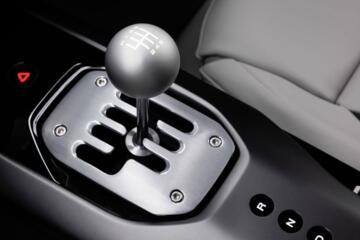
In many cases, yes. A manual transmission is mechanically simpler and generates less heat. However, a DCT (Dual-Clutch) can be exceptionally durable if the fluid is changed religiously, whereas a manual's lifespan is heavily dependent on the driver's skill in not burning the clutch.
Can I use regular gas in a high-performance car?
Never. High-performance engines use high compression ratios or turbocharging, requiring 91 or 93 octane to prevent "knock" or detonation. Using low-octane fuel forces the ECU to retard timing, reducing power and potentially causing long-term engine damage.
Is it worth buying a high-mileage sports car?
It is worth it only if there is a paper trail of maintenance. A 100,000-mile Porsche with 20 service records is often a better buy than a 40,000-mile car with zero records, as the higher-mileage car has likely had its "wear items" already replaced.
Author’s Insight
In my two decades of evaluating performance machinery, I've found that the most reliable sports car is the one that gets driven regularly. These machines do not like to sit; seals dry out and fluids settle when a car is parked for months. My personal philosophy is that "use is maintenance." If you buy a well-engineered platform like a Cayman or a Corvette and treat it with mechanical sympathy—letting it warm up and using the best fluids—it will easily outlast a neglected economy car. Reliability is a partnership between the engineer and the owner.
Summary
Achieving longevity with a sports car requires a shift in mindset from reactive to proactive care. By selecting platforms with robust engine architecture, such as the B58 or the GM LT series, and adhering to strict fluid analysis and thermal management, you can enjoy high-performance driving without the constant threat of a breakdown. The most actionable advice for any owner is to follow the "severe" maintenance schedule and never skimp on fuel or oil quality. Reliability exists in the sports car world, but it must be earned through consistent, informed ownership.