Future Classic Basics
A "future classic" is not merely an old car; it is a vehicle that captures a specific cultural moment or technological peak. Historically, cars that transition from "used" to "classic" status follow a U-shaped valuation curve. They depreciate for 12–15 years, plateau, and then begin a steady climb as nostalgia and scarcity take hold.
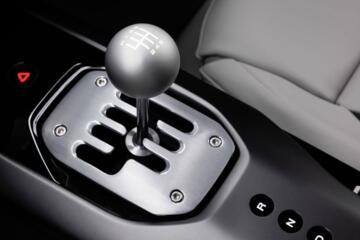
Take the 1% rule in automotive production: models with limited production runs or unique engine configurations—such as the naturally aspirated high-revving engines of the mid-2000s—are currently at the bottom of their depreciation curve. Data from Hagerty’s Bull Market List suggests that analog driver interfaces (manual transmissions, hydraulic steering) are the primary value drivers in 2026.
Real-world examples include the shift in BMW E46 M3 prices. A decade ago, these were $15,000 "used cars"; today, well-maintained examples frequently cross the $40,000 mark at auctions like Bring a Trailer. The window to buy the next generation of these performers is narrowing as internal combustion engines (ICE) become rarer.
Market Risks
The most frequent mistake buyers make is prioritizing a low entry price over service history. In the world of high-performance vehicles, a "cheap" car often becomes the most expensive asset you own. Deferred maintenance on complex German or Italian systems can lead to repair bills that exceed the vehicle's total market value.
Another issue is the "Mod Trap." While aftermarket turbos or stiffened suspension might improve lap times, they generally devalue a car in the eyes of serious collectors. Originality is the currency of the classic car world. A bone-stock vehicle with higher mileage will almost always outsell a low-mileage car with non-reversible modifications.
Ignoring "Bore Scoring" or "IMS Bearing" issues in specific Porsche models or cooling system vulnerabilities in older BMWs can lead to catastrophic engine failure. Many buyers skip the Pre-Purchase Inspection (PPI), a critical $300–$500 investment that can save $10,000 in unforeseen engine rebuilds. Failure to verify the VIN against service records on platforms like Carfax or AutoCheck is a risk no serious investor should take.
Strategic Selections
The Analog Precision of the Porsche Cayman (987.2)
While the 911 gets the glory, the 987.2 generation Cayman (2009–2012) is the smarter buy. It introduced the DFI (Direct Fuel Injection) engines, which eliminated the dreaded IMS bearing failure found in earlier models. Its mid-engine layout provides a balance that many purists argue surpasses the rear-heavy 911.
Focus on finding a "Base" or "S" model with a 6-speed manual. Production numbers for the 987.2 were significantly lower than the 987.1 due to the global financial crisis, ensuring a built-in scarcity. Use tools like VinAnalytics to verify specific options like Sport Chrono or PASM, which add 10–15% to the resale value.
Nissan 370Z: The Last of the V6 Samurais
With the discontinuation of many naturally aspirated V6 engines, the 370Z represents an era of raw power. It remained in production for over a decade, meaning parts are plentiful, but the early Nismo versions are the ones to watch. They offer a factory-tuned chassis and a distinctive aesthetic that appeals to the "Gran Turismo" generation.
Look for 2015+ models which received the updated suspension tuning. These cars are currently transitioning from "drift missiles" to collector pieces. Keeping one in OEM condition is the key to appreciation. Monitoring Z-specific forums and specialized sales sites like Cars & Bids shows a steady 5% annual uptick for clean, manual examples.
BMW 1 Series M Coupe’s Younger Sibling: The M235i/M240i
The F22 chassis M240i, specifically with the B58 engine, is a masterpiece of modern engineering. While the M2 is the "obvious" choice, the M240i offers 90% of the performance at 60% of the cost. The B58 engine is already legendary for its reliability and tuning potential, often cited as the "modern 2JZ."
For investment purposes, seek out the RWD manual variants. Most of the market opted for xDrive and the ZF8 automatic, making the RWD manual a rare configuration. Services like Black Book show that these specific specs hold their value significantly better than their automatic counterparts.
Chevrolet Corvette C6 Z06: The Displacement King
The C6 Z06 is a monster of a car, featuring the 7.0L LS7 V8. It is one of the last high-displacement, naturally aspirated engines ever put into a production car. With 505 hp and a carbon-fiber-reinforced chassis, its performance-to-dollar ratio is currently unmatched. It is a legitimate supercar killer that can still be serviced at a local Chevy dealer.
The "Achilles heel" is the valve guide issue. Savvy buyers look for "fixed" cars where the heads have been addressed by reputable shops like Katech or American Heritage Performance. Documentation of this fix is a massive selling point that adds instant liquidity to the asset.
Honda S2000 (AP2): The 9,000 RPM Farewell
While prices have already started to climb, the AP2 (2004–2009) still has room to grow. The S2000 is a masterclass in engineering, featuring a specific power output that was a world record for naturally aspirated engines for years. It’s a mechanical watch in car form—precise, reliable, and tactile.
Avoid cars with rolled fenders or aftermarket forced induction. A "10/10 VIN" car (where all original factory VIN stickers are present on every body panel) is the gold standard. Check Bring a Trailer's historical data; the delta between a modified S2000 and a stock one can be as much as $20,000.
Audi RS5 (B8.5): The V8 Symphony
The 2013–2015 Audi RS5 features a high-revving 4.2L V8 that shares its DNA with the R8 supercar. It was the last of the naturally aspirated RS models before Audi switched to turbocharging. The sound alone at 8,500 RPM is worth the price of admission.
Potential buyers should use the Ross-Tech VCDS tool to check for carbon buildup and DSG clutch wear. While maintenance is higher than a Nissan, the rarity of a V8 Audi coupe ensures it will remain a sought-after piece for enthusiasts who miss the "high-rev" era of European performance.
Success Stories
Case Study 1: The E92 M3 Acquisition
In 2021, a private collector purchased a 2011 BMW M3 (E92) with a manual transmission for $32,000. The car had 55,000 miles and a documented rod bearing replacement—a known weak point. By 2025, similar examples were trading for $52,000. The owner invested $3,000 in preventative maintenance and enjoyed 4 years of driving, resulting in a net profit of $17,000 while essentially driving for free.
Case Study 2: The Lotus Elise Pivot
An enthusiast opted for a 2005 Lotus Elise over a new luxury sedan. Purchased for $38,000 in 2019, the car was used as a weekend toy. Because Lotus moved toward heavier, more electronic-heavy models like the Emira, the demand for the raw, analog Elise skyrocketed. The car recently sold for $62,000. The low overhead (Toyota-sourced engine) kept running costs minimal, maximizing the return on investment.
Selection Checklist
| Factor | Ideal Feature | Why it Matters |
|---|---|---|
| Transmission | Manual (3-Pedal) | High rarity and engagement. |
| Aspiration | Naturally Aspirated | Becoming extinct in EV era. |
| History | Full OEM Records | Proves maintenance/integrity. |
| Condition | 100% Stock | Collectors avoid modifications. |
Risk Mitigation
Buying based on emotion rather than data is the quickest way to lose money. Ensure you are checking the "Sold" listings on auction sites, not just the "Asking" prices on Craigslist or Facebook Marketplace. Asking prices represent what a seller wants; sold prices represent what the market actually pays.
Neglecting the "Paper Trail" is another cardinal sin. In the high-end market, a binder full of receipts from a specialized independent shop is worth more than a "fully stamped" book from a generic dealership. It shows the owner went above and beyond to find the best technicians for that specific marque.
Finally, don't ignore the "Daily Driver" trap. Using a future classic as a daily commuter in a salt-heavy climate (like the Northeast US or UK) will destroy its value through underbody corrosion. If you want the car to appreciate, it must be stored in a climate-controlled environment and kept away from road salt.
FAQ
Which car is the safest bet for $30,000 right now?
The Porsche Cayman (987.2) is widely considered the safest investment due to Porsche's strong brand heritage and the mechanical reliability of the DFI engine.
Does high mileage automatically disqualify a car?
Not if the maintenance is impeccable. A 100,000-mile car with a recent engine refresh and suspension overhaul is often a better buy than a 30,000-mile car that has sat in a garage for a decade with dry-rotted seals.
Are Japanese cars appreciating faster than European cars?
Currently, yes. The "JDM" market is seeing an explosion in value as Gen X and Millennials reach their peak earning years and seek out the cars they grew up seeing in movies and games.
Should I buy a car with a "Rebuilt" or "Salvage" title?
Generally, no. For investment purposes, a branded title usually permanently caps the value at 50-60% of a clean-title equivalent, regardless of the quality of the repair.
How important is color in resale value?
Extremely. "Hero colors" (the colors used in the original marketing brochures) or rare individual colors can command a 10–20% premium over silver, black, or white.
Author’s Insight
I have spent two decades watching "depreciated junk" turn into auction-house darlings. My biggest takeaway is that you should never buy a car strictly as an investment. Buy a car you actually want to drive, because if the market shifts, you should still be happy with the machine in your garage. I personally believe the shift toward electrification is creating a "hard cap" on the production of analog cars, meaning anything with a manual gearbox and a hydraulic steering rack from the 2000-2015 era is currently a buy-and-hold asset.
Summary
The transition to electric mobility has set a definitive expiration date on the era of the mechanical, driver-focused sports car. By focusing on models like the Porsche Cayman 987.2, the Corvette C6 Z06, or the BMW M240i, enthusiasts can enjoy world-class performance while insulating themselves against depreciation. Your primary objective should be to find a stock, well-documented example and perform a rigorous Pre-Purchase Inspection. Secure these vehicles now, maintain their condition, and you will own a piece of automotive history that pays dividends both on the road and in the bank.