The Capability Gap
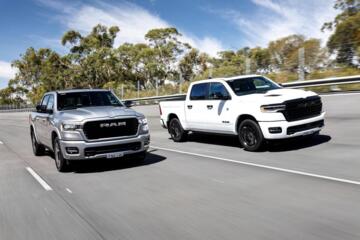
The modern automotive market is driven by "spec warfare," where manufacturers push maximum towing figures to attract buyers. However, there is a massive disconnect between a vehicle's maximum laboratory rating and its comfortable operating range. For instance, a light-duty pickup might be rated for 12,000 lbs, but pulling that weight through the Rockies is a high-stress endeavor for both the engine and the driver.
In practice, experienced fleet managers follow the "80/20 Rule." If your trailer weighs 8,000 lbs, you should aim for a vehicle with at least a 10,000-lb capacity. This 20% safety margin accounts for fluid weights, gear, and atmospheric conditions. According to J.D. Power, the average light-duty truck owner only tows more than 5,000 lbs once or twice a year, yet many purchase heavy-duty (HD) platforms that incur a 15-25% penalty in fuel economy.
Consider a landscape contractor who buys a dual-rear-wheel diesel for a 3,000-lb utility trailer. They are spending roughly $10,000 extra on the engine and $2,000 more annually in maintenance (DEF, larger oil capacities, expensive tires) for a capability they never touch. Precision matching is the key to profitability and personal satisfaction.
Common Buying Errors
The most frequent mistake is confusing "Towing Capacity" with "Payload Capacity." Owners often focus on the big number on the bumper but ignore the yellow sticker inside the door jamb. Payload is everything sitting in or on the truck, including the tongue weight of the trailer. A truck can often pull a trailer but technically be "overloaded" because the family of four and the tongue weight exceed the payload limit.
Another pain point is the "Diesel Trap." While diesel engines offer incredible torque, modern emissions systems like EGR and DPF require high-heat cycles. If you use a heavy-duty diesel primarily for short trips or grocery runs, the exhaust system will clog, leading to "limp mode" and repairs costing upwards of $3,500. For anyone driving less than 15,000 miles a year or towing infrequently, a modern turbocharged gas engine is almost always the more economical choice.
Finally, there is the issue of "Feature Creep." Upselling from a mid-size to a full-size truck often happens because of cabin tech, not frame strength. This leads to a vehicle that is difficult to park in urban environments and costs more to insure. The consequences of over-trucking are tangible: higher monthly payments, increased registration fees based on weight classes, and steeper depreciation curves on specialized HD models.
Strategic Selection
Calculating True Payload
To find your real need, sum the weight of all consistent passengers, a full tank of fuel (usually included in curb weight but worth checking), and 10-15% of your max trailer weight as tongue weight. If your family weighs 600 lbs and your trailer tongue adds 800 lbs, you need a minimum payload of 1,400 lbs before adding a single toolbox. Services like Weigh My Truck by CAT Scale can provide exact axle weights for $15, giving you a baseline of what you currently carry.
The Gas vs Diesel Math
Unless you are towing over 10,000 lbs for more than 40% of your total mileage, the gasoline option is superior. A 6.6L gas V8 or a 3.5L Twin-Turbo V6 typically saves $8,000 to $12,000 upfront. With diesel fuel often priced 20% higher than 87 octane, the "break-even" point for a diesel engine's fuel economy advantage often takes 150,000 miles to reach. Use tools like the FuelEconomy.gov "Can I Save Money" calculator to run your specific zip code prices.
Decoding Gear Ratios
The rear axle ratio is the most overlooked spec. A 3.21 ratio is great for highway fuel economy but sluggish for towing. Conversely, a 4.10 ratio provides massive "get-up-and-go" for heavy loads but will drink fuel at 70 mph. For a balanced "do-it-all" truck, the 3.55 or 3.73 ratio is the sweet spot. If you find a deal on a truck with the "wrong" gears, remember that re-gearing an axle at a shop like 4 Wheel Parts costs about $1,500—often cheaper than buying a higher trim level.
Evaluating Bed Lengths
A 5.5-foot "short" bed is essentially a trunk with no lid. If you intend to haul 4x8 plywood sheets or ATVs, a 6.5-foot bed is the functional minimum. Opting for a smaller cab (Extended vs. Crew) often allows for a longer bed on the same wheelbase, making the truck more maneuverable. Check the wheelbase measurements on manufacturer spec sheets; every 10 inches added to the wheelbase increases your turning radius by approximately 2-3 feet.
Mid-Size vs Full-Size
Modern mid-size trucks like the Colorado or Ranger now tow 7,500+ lbs, which covers most boats and travel trailers. The benefit here is width. A full-size truck is roughly 80 inches wide, while a mid-size is closer to 73 inches. This 7-inch difference is the difference between fitting in a standard garage and staying on the driveway. If your towing needs are occasional, the mid-size platform offers better "daily driver" ergonomics and lower tire replacement costs.
Standardizing Hitch Gear
Don't let the truck do all the work. Investing $600 in a Weight Distribution Hitch (WDH) like an Equal-i-zer allows a smaller truck to handle a larger trailer with more stability than a big truck using a "dead weight" ball. This allows you to stay in a lower vehicle class while maintaining safety. A WDH shifts weight from the rear axle to the front axle, improving steering geometry and braking performance significantly.
Real World Use Cases
Case Study 1: The Weekend Warrior
A homeowner in Austin, TX, was looking at a 3/4-ton diesel for a 7,000-lb camper. After analyzing their usage, they realized they only tow 6 times a year. By switching to a 1/2-ton with a Max Tow Package and a 3.5L V6, they saved $9,000 on the purchase price and reduced monthly fuel spend by $120. Over 5 years, the total cost of ownership (TCO) plummeted by nearly $18,000.
Case Study 2: The Fleet Upgrade
A small plumbing company in Chicago was running four 1-ton vans. By switching to specialized "service body" mid-size trucks with organized shelving, they reduced their fuel consumption by 18%. The smaller footprint also allowed technicians to park in tight alleyways, increasing "billable hours" by 10% because they spent less time searching for oversized parking spots.
Selection Checklist
| Factor | Light Duty (1/2 Ton) | Heavy Duty (3/4 & 1 Ton) |
|---|---|---|
| Max Towing | 8,000 - 13,000 lbs | 14,000 - 35,000+ lbs |
| Daily Comfort | High (Coil springs/Independent) | Low (Leaf springs/Solid axle) |
| Fuel Efficiency | 17-24 MPG | 12-16 MPG |
| Maintenance Cost | Standard ($80 Oil Change) | High ($200+ Oil/Fuel Filters) |
| Garage Fit | Fits most standard garages | Usually requires outdoor/oversize |
Avoid These Pitfalls
Never trust the "Salesman's Promise." Sales staff at dealerships often quote the "Best in Class" towing figure, which only applies to a very specific, base-model, two-wheel-drive configuration. Every option you add (4WD, sunroof, leather seats) subtracts from your actual payload. Always look for the specific tire and loading sticker on the B-pillar of the exact VIN you are buying.
Ignore the "Max Towing" marketing on the bumper. This number often assumes an empty truck with only a 150-lb driver. If you have a crew of three and a bed full of tools, you can easily exceed your Gross Combined Weight Rating (GCWR) long before you hit the "Max Tow" limit. Use a VIN decoder or the RAM/Ford/GM towing calculators online to input your specific build for accurate data.
FAQ
Can a mid-size truck tow a horse trailer?
Generally, no. While the weight might be within limits, the high center of gravity and the shifting weight of live animals require the wider track and heavier curb weight of a full-size truck to prevent the "tail wagging the dog" effect.
Is 4WD necessary for towing?
It depends on the boat ramp or the job site. While RWD has a slightly higher towing capacity (due to lower curb weight), 4WD is essential for traction on slippery ramps or muddy construction sites. It also significantly aids resale value.
What is the "Payload" on the door?
This is the most critical number. It represents the maximum weight of all cargo and passengers. If your payload is 1,500 lbs and your trailer tongue weight is 800 lbs, you only have 700 lbs left for people, dogs, and gear.
Should I buy a dually?
Only if you are towing a large 5th wheel or gooseneck trailer over 15,000 lbs regularly. Dual-rear-wheel trucks are difficult to park, require 6 tires when replacing, and often have lower fuel economy due to increased rolling resistance.
How does altitude affect towing?
Naturally aspirated engines lose about 3% of their power for every 1,000 feet of elevation. If you live in Denver, a turbocharged engine is a "need," not a "want," because it can compensate for thinner air, whereas a standard V8 will struggle.
Author’s Insight
In my fifteen years of consulting for commercial fleets and individual buyers, I’ve seen more "buyer's remorse" from over-buying than under-buying. People buy for the 1% of their life—the one week of vacation—instead of the 99% of their daily commute. My best advice is to rent a heavy-duty truck from a service like Enterprise Truck Rental for that one big trip. It is far cheaper to spend $800 on a week's rental than to carry an extra $15,000 in debt and higher fuel costs for the other 51 weeks of the year.
Summary
Determining how much truck you need requires an honest assessment of your payload, towing frequency, and geographical environment. Focus on the door jamb payload sticker rather than flashy commercial ratings. By choosing a vehicle that matches your 90th-percentile use case—and perhaps renting for the extremes—you will save thousands in ownership costs while enjoying a more comfortable, parkable, and efficient daily driver. Start by weighing your current gear today to get an accurate baseline for your next purchase.