Modern Fleet Evolution
For decades, the choice for a work truck was binary: a high-displacement gasoline V8 or a turbocharged diesel. Today, a third contender has entered the arena, blending electric motor assistance with internal combustion. Unlike passenger hybrids optimized solely for city commuting, work-ready hybrids focus on "load leveling"—using electric torque to fill gaps in the power curve during initial acceleration or heavy towing.
In practice, this looks like a contractor using an on-board inverter to power a circular saw and a compressor simultaneously without a noisy, standalone generator. For example, a modern 3.5L twin-turbo hybrid setup can deliver nearly 600 lb-ft of torque, outperforming many standard V8s while idling less. Real-world telemetry shows that in stop-and-go heavy traffic, these systems can reduce fuel consumption by 20% to 30%, which translates to thousands of dollars in annual savings for high-mileage fleets.
Recent industry data indicates that hybrid systems can provide up to 7.2kW of exportable power. This is enough to run a mobile welding station or a small job-site trailer for days on a single tank of gas. It effectively turns the vehicle from a simple transport tool into a mobile power plant, fundamentally changing the logistics of remote work.
Hybrid System Resistance
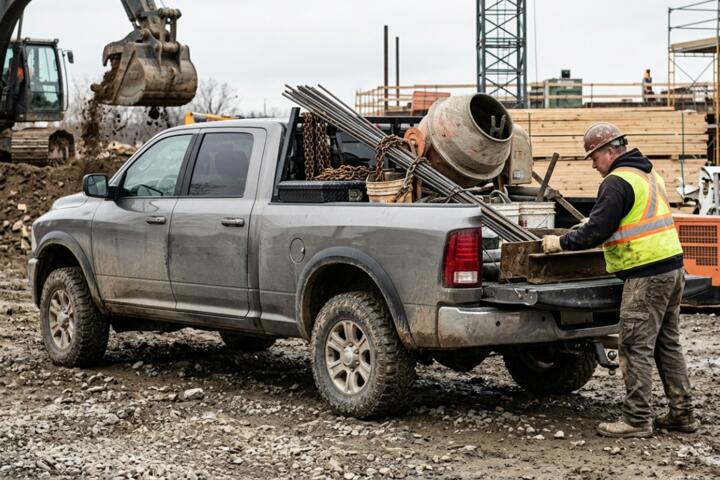
One major hurdle is the "payload penalty." The addition of a high-voltage battery pack and electric motors adds significant curb weight—often between 400 and 600 pounds. Since the Gross Vehicle Weight Rating (GVWR) remains fixed by class limits, every pound of battery is a pound less of gravel, tools, or equipment you can legally carry in the bed.
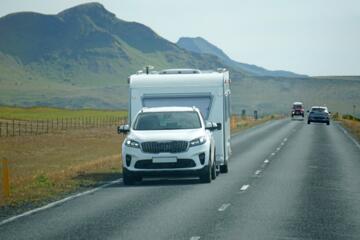
Another critical issue is thermal management during sustained heavy towing. While electric motors provide instant torque to get a 10,000-pound trailer moving, they generate heat. On a long 6% grade in high ambient temperatures, the battery may deplete or throttle its output to prevent overheating, leaving the small-displacement engine to do all the work. If the driver isn't prepared for this transition, the sudden drop in available power can be jarring.
The complexity of dual powertrains also raises concerns about long-term maintenance in harsh environments. Dust, vibration, and extreme cold affect lithium-ion batteries differently than mechanical gears. In deep-winter regions like the Dakotas or Alberta, battery chemistry slows down, reducing the regenerative braking efficiency and the "electric boost" precisely when the engine is already struggling with cold starts and thickened lubricants.
Understanding the Payload-to-Battery Tradeoff
Fleet managers often overlook that a hybrid's "Max Towing" rating is often lower than its purely internal combustion counterpart within the same trim level. This occurs because the extra hardware eats into the GCWR (Gross Combined Weight Rating).
Thermal Throttling in High-Stress Scenarios
During a "hot-soak" event at a job site—where the truck sits in the sun—the cooling system must prioritize the battery. This can lead to reduced air conditioning performance or limited electric-only operation until the system stabilizes.
Reliability Gaps in Remote Infrastructure
If a hybrid component fails in a remote logging or mining site, specialized diagnostic tools are required. Standard mechanical shops in rural areas may lack the certifications to handle high-voltage 400V or 800V systems safely.
The Total Cost of Ownership (TCO) Calculation Error
Many buyers focus on the $3,000–$5,000 price premium for a hybrid but fail to calculate the "idle time" savings. A truck idling for 4 hours a day at a job site wastes gallons of fuel; a hybrid utilizes the battery for electronics, firing the engine only briefly to recharge.
Resale Value Uncertainty
The secondary market for high-mileage work hybrids is still maturing. There is a lingering fear among second-hand buyers regarding the cost of out-of-warranty battery replacements, which can impact the vehicle's residual value after a 5-year lease.
Electronic Integration Glitches
Aftermarket equipment like hydraulic lifts or specialized lighting rigs can sometimes conflict with a hybrid's sophisticated power management software, leading to "ghost" error codes that are difficult to clear without factory intervention.
Strategic Implementation
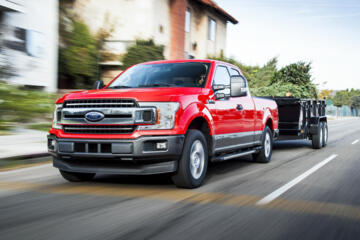
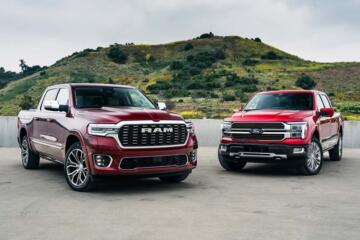
To succeed with a hybrid in a work environment, you must pivot from a "fuel-only" mindset to a "utility-first" perspective. The most effective way to utilize these trucks is by leveraging the Pro Power Onboard (found in Ford F-150 PowerBoost) or similar systems. Instead of hauling a 300-pound gas generator that requires its own maintenance and fuel supply, you utilize the truck's integrated system. This reduces bed clutter and saves approximately $15–$25 per day in small-engine fuel.
On the road, the hybrid system excels in "creep" scenarios—heavy traffic or job site maneuvers. The electric motor handles the low-speed movement, which is traditionally where internal combustion engines are least efficient and suffer the most wear. By letting electricity handle the first 15 mph, you significantly extend the life of the transmission and brake pads, as regenerative braking handles the bulk of the deceleration.
For fleet operators, telematics services like Ford Pro or Geotab are essential. These tools provide real-time data on how often the electric motor is engaged. If a driver’s route is 90% highway at 75 mph, the hybrid advantage vanishes. However, for urban delivery or mixed-use construction routes, the data usually shows a 22% improvement in MPG. This makes the "break-even" point for the hybrid premium occur at roughly 45,000 miles, much sooner than previously thought.
Sector-Specific Examples
Case Study 1: Mid-Sized Electrical Contracting Firm
A Raleigh-based company replaced five standard V8 trucks with hybrid equivalents. Their primary challenge was the constant need to run power tools at residential sites without grid access. By using the truck's 7.2kW inverter, they eliminated the need for external generators. Over 12 months, they reported a 28% reduction in fuel costs and a 15% increase in technician productivity, as they no longer spent time fueling or maintaining portable generators. The total savings per truck averaged $4,200 annually.
Case Study 2: Rural Fencing and Land Management
A contractor in Montana utilized a hybrid for fence repairs across a 5,000-acre ranch. The hybrid’s ability to provide silent "electric-only" movement at low speeds allowed the contractor to approach livestock without spooking them. However, they noted that in winter months (-20°F), the fuel economy advantage dropped by 40% compared to summer performance. Despite this, the convenience of having a 240V outlet in the truck bed for a mobile welder outweighed the seasonal fuel efficiency dip.
Hybrid vs. Traditional ICE
| Feature / Metric | Standard V8 / Turbo Gas | Hybrid (HEV) | Turbo Diesel |
|---|---|---|---|
| Low-End Torque | Moderate (High RPM) | Instant (Electric Assist) | High (Low RPM) |
| Fuel Economy (City) | Poor (13–16 MPG) | Excellent (24–25 MPG) | Moderate (18–20 MPG) |
| Payload Capacity | Maximum | Reduced (by 400-600 lbs) | Moderate |
| Job-Site Power | Limited (12V/120V low amp) | High (Up to 7.2kW / 240V) | Limited |
| Maintenance Cost | Standard | Lower Brakes / Higher Complexity | High (DEF, Turbo, Filters) |
Avoiding Common Pitfalls
The most frequent error is treating a hybrid like a heavy-duty (HD) truck. A half-ton hybrid is still a half-ton truck. Overloading the bed to "make up" for the battery weight will lead to premature suspension wear and compromised braking. Always check the door-jamb sticker for the specific payload rating of that VIN, as the brochure numbers are often overly optimistic.
Avoid "short-cycling" the engine in extremely cold weather. If the truck keeps switching to electric mode before the gasoline engine reaches operating temperature, condensation can build up in the oil. In winter, use the "Tow/Haul" mode even when empty to force the engine to run longer and reach its thermal equilibrium, protecting the internal components from moisture-related sludge.
Lastly, don't ignore the cooling stack. Hybrid trucks have more complex radiators and heat exchangers for the inverter and battery. If you are driving through tall brush or muddy sites, ensure the front grille and lower intakes are clear. A clogged cooling fin that might just make a V8 run "a bit hot" could trigger a total system shutdown in a hybrid to protect the sensitive electronics.
FAQ
Do hybrid batteries last in heavy-duty work environments?
Modern truck batteries are designed for a 10-year/150,000-mile lifespan. Most manufacturers provide an 8-year/100,000-mile warranty specifically for high-voltage components. In work conditions, they are ruggedized with liquid cooling/heating to manage the stress of high-output use.
Can a hybrid truck jump-start another vehicle?
Yes, but you must use the 12V auxiliary battery, not the high-voltage pack. Consult the owner’s manual, as the terminal locations are often tucked away in the engine bay or behind a panel to prevent accidental contact with the high-voltage system.
Is the 4WD system different on a hybrid?
Most current work hybrids (like the Toyota Tundra i-FORCE MAX or Ford PowerBoost) still use a mechanical transfer case and driveshaft. This ensures that the 4WD performance remains identical to traditional trucks, unlike some "e-AWD" SUVs that use small motors on the rear axle.
Does towing a heavy trailer drain the battery permanently?
No. The system is designed to maintain a "buffer" charge. Even when the gauge shows low, the truck will use the gasoline engine to recharge the battery while driving or via regenerative braking on descents, ensuring you always have a "boost" for the next hill.
Are insurance premiums higher for hybrid work trucks?
Typically, premiums are 10–15% higher due to the increased replacement cost of the vehicle and the specialized parts involved. However, many commercial insurers offer "green fleet" discounts that can offset this initial increase.
Author’s Insight
Having spent years analyzing fleet telemetry, I’ve seen that the "hybrid vs. gas" debate isn't about power—it's about the duty cycle. If your truck spends 80% of its time on the interstate at 70 mph, the hybrid is a waste of capital. But if you’re a tradesperson who spends half the day idling or moving between urban job sites, the integrated power inverter alone makes the hybrid a superior tool. My advice: don't buy the hybrid for the MPG; buy it for the mobile 240V power. That is the true "killer feature" for the modern job site.
Summary
Hybrid pickups have proven they can handle real-world work conditions, provided the operator understands their specific strengths and limitations. They offer unmatched utility through integrated power export and superior low-end torque for city driving, though they sacrifice some raw payload capacity to accommodate their batteries. For businesses focused on reducing idle time and eliminating standalone generators, the hybrid is no longer a niche experiment—it is a competitive advantage. To get the most out of these vehicles, prioritize models with high-output inverters and utilize telematics to ensure your routes justify the technology. Evaluate your specific payload needs and regional climate before committing, but for most mixed-use contractors, the hybrid platform is ready for the heavy lifting.