Interior Volume Basics
Cargo space is more than just a raw cubic foot measurement found in a brochure; it is about usable geometry. Manufacturers often measure volume using the SAE J1100 standard, but this doesn't account for wheel well intrusions or the rake of a D-pillar. Real-world utility depends on "aperture width" (the size of the opening) and the "lift-over height" (how high you must hoist a heavy suitcase).
In professional testing, we often see a discrepancy between paper specs and reality. For instance, a vehicle boasting 80 cubic feet might actually hold less than a competitor with 75 cubic feet if the latter has a flatter folding seat mechanism. The shift toward electrification has also introduced the "Frunk" (front trunk), adding 2 to 15 cubic feet of isolated storage for charging cables or groceries.
Data from the 2024 J.D. Power Automotive Performance, Execution and Layout (APEAL) Study shows that "storage and space" remains a top-three driver of satisfaction for SUV owners. Furthermore, a 10% increase in cargo efficiency can reduce the need for roof racks, which in turn improves highway fuel economy by up to 25% due to reduced aerodynamic drag.
Poor Management Costs
Many families make the mistake of buying for "max capacity" rather than "accessible capacity." They often purchase large three-row SUVs only to find that with the third row in use, the remaining trunk space is negligible—frequently less than 15 cubic feet, which is smaller than a Toyota Camry's trunk. This leads to the dangerous practice of stacking luggage above the window line, obstructing the driver’s rear view.
Improperly secured loads are a significant safety hazard. In a 35 mph collision, an unanchored 20-pound suitcase can exert 600 pounds of force. Beyond safety, there is the mechanical strain; exceeding a vehicle’s Gross Vehicle Weight Rating (GVWR) leads to premature suspension wear and increased braking distances. I have seen families ruin a set of rear shocks in a single cross-country trip simply by ignoring payload stickers in the door jamb.
The "just cram it in" approach also damages interior trim. Scratched plastic panels and ripped headliners significantly hurt resale value. According to Kelley Blue Book, a vehicle with a "Fair" interior condition can be worth $2,000 to $4,000 less than one in "Excellent" condition when it comes time for trade-in. Strategic planning isn't just about convenience; it's about asset protection.
Solutions for Utility
Prioritizing Flat-Fold Geometry and Low Lift-Over
When selecting a family vehicle, look for "Stow 'n Go" seating or similar systems found in the Chrysler Pacifica. The ability to fold seats directly into the floor creates a perfectly flat loading surface. This eliminates the "canyon" effect where items fall into the footwell. A low lift-over height, typically found in wagons and minivans, reduces physical strain on the lower back during loading.
Utilizing Under-Floor and Hidden Compartments
Many modern crossovers, like the Honda CR-V or the Hyundai Tucson, feature adjustable load floors. By dropping the floor to its lowest setting, you gain roughly 2 to 4 inches of vertical height, which is often the difference between a stroller fitting upright or having to lie flat. Use these hidden "basements" for emergency kits, jumper cables, and items you don't need daily access to.
Maximizing the Modular Architecture of Minivans
Despite the SUV trend, the minivan remains the king of volume. A Honda Odyssey offers up to 158 cubic feet of total volume. The key is modularity; removing the middle row or using the "Magic Slide" seats allows for long items (like IKEA flat-packs) to be placed down the center while still keeping outboard seats available for children. This configuration maintains a low center of gravity for better handling.
Investing in Precision-Fit Cargo Organizers
Generic storage bins are often inefficient because they leave gaps. High-end aftermarket solutions from brands like WeatherTech or Thule offer vehicle-specific trunk liners and dividers. These prevent "cargo shift" during cornering. For families with pets, a dedicated metal barrier is essential—it keeps the dog in a safe zone and prevents them from leaping over seats into the passenger area.
Leveraging Smart Roof Storage Systems
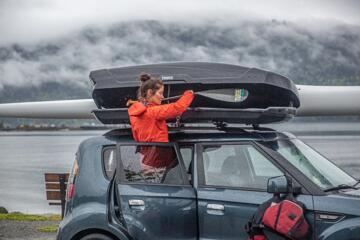
When the interior is at its limit, look upward. However, don't just throw a bag on the roof. Aerodynamic shells like the Yakima SkyBox reduce noise and drag. Always calculate your roof's dynamic weight limit—usually around 165 pounds. Exceeding this can make the vehicle top-heavy, increasing the risk of a rollover during emergency maneuvers. Stick to lightweight, bulky items like sleeping bags on the roof.
Mastering the Art of Soft Luggage
Hard-shell suitcases are the enemy of maximizing space. They are unforgiving shapes. Using high-denier nylon duffel bags allows you to "compress" the load into the odd-shaped corners of the trunk. Professional packers use "packing cubes" within these duffels to maintain organization. This method can increase the amount of gear carried by roughly 15-20% compared to rigid luggage.
Capacity Success Cases
Case Study 1: The Suburban Transition
A family of five was struggling with a mid-size SUV for camping trips. They were using a rooftop bag and a hitch-mounted tray, which made the vehicle nearly 20 feet long and difficult to park. They transitioned to a Toyota Sienna Hybrid. By utilizing the deep trunk well (behind the third row) and switching to soft-sided gear, they eliminated all external storage. Result: Fuel economy improved from 18 mpg to 35 mpg, and setup time at campsites was reduced by 30 minutes.
Case Study 2: Professional Photography Logistics
A freelance commercial photographer needed to transport lighting rigs and a family of four. They opted for a Chevrolet Suburban with the Max Trailering Package. By installing a custom DECKED drawer system in the rear, they created a secure, flat platform for family groceries on top while $15,000 worth of gear stayed hidden in drawers below. This dual-purpose setup maintained the vehicle's "family car" status while serving as a professional tool.
Top Storage Vehicles
| Vehicle Class | Top Model | Specs & Top Feature |
|---|---|---|
| Full-Size SUV | Chevy Suburban | 144.7 cu.ft. Massive length. |
| Minivan | Chrysler Pacifica | 140.5 cu.ft. Stow 'n Go seats. |
| 3-Row SUV | Kia Telluride | 87.0 cu.ft. Wide aperture. |
| 2-Row SUV | Honda CR-V | 76.5 cu.ft. Low lift-over. |
| EV SUV | Tesla Model X | 91.0 cu.ft. Frunk + floor storage. |
Common Pitfalls
The most frequent error is ignoring the "Cargo Weight Rating." Just because a box fits doesn't mean the car should carry it. Check the tire pressure placard; it lists the maximum weight for occupants and cargo. If you have four 200-lb adults, you may only have 200 lbs of cargo capacity left in some smaller SUVs.
Another mistake is blocking the HVAC vents. In many SUVs, rear vents are located near the floor or the side panels of the cargo area. Blocking these with bags can cause the air conditioning compressor to overwork, leading to a hot cabin for the kids and potential mechanical failure over time.
Lastly, don't forget about the "Emergency Access Rule." Never pack the trunk so tightly that you cannot reach the spare tire, jack, or first aid kit without unloading the entire car on the side of a busy highway. I recommend keeping a small "essentials bag" in the passenger footwell to avoid opening the trunk at all during short stops.
FAQ
Does "Total Volume" include the space when seats are removed?
Yes, usually. Manufacturers report "Max Cargo Volume" with all rear seats folded or removed. Always check the "Cargo Volume Behind Second Row" for a more realistic daily-use figure.
Are roof boxes better than hitch-mounted carriers?
Hitch carriers are better for fuel economy because they stay in the vehicle's slipstream, but they block rear hatch access and can interfere with parking sensors. Roof boxes are better for long, light items like skis but hurt MPG.
How do I secure loose items without built-in hooks?
You can purchase aftermarket cargo nets that clip into the child-seat tether anchors (LATCH points) on the back of the seats. This is a safe way to prevent heavy items from sliding forward.
Does a panoramic sunroof affect cargo space?
Indirectly, yes. Sunroof mechanisms often lower the interior headliner by 1 to 2 inches. If you are trying to fit a tall item upright, a model without a sunroof may offer slightly more vertical clearance.
What is the best way to clean a cargo area after a spill?
Prevention is best. Use a rubberized cargo tray from a brand like Husky Liners. If a spill occurs on carpet, use an enzyme-based cleaner immediately to prevent odors from soaking into the floor insulation.
Author’s Insight
In my fifteen years of testing family vehicles, I’ve found that the most "spacious" car on paper is often the most frustrating in practice if the seat-folding mechanism is clunky. I always tell my clients to take their largest stroller or gear bag to the dealership. If it doesn't fit easily during the test drive, it will be a daily headache for the next five years. My personal preference is always a vehicle with a flat load floor—the hidden ergonomics of a level surface save more time and stress than an extra five cubic feet of jagged space ever could.
Summary
Maximizing cargo space requires a balance between choosing the right vehicle architecture and utilizing smart organizational habits. Focus on usable dimensions, respect your vehicle's weight limits, and invest in quality containment tools. By prioritizing a flat load floor and accessible storage, you turn your family vehicle from a cluttered box into an efficient travel machine. Before your next trip, audit your gear, switch to soft luggage, and ensure your emergency equipment remains accessible.