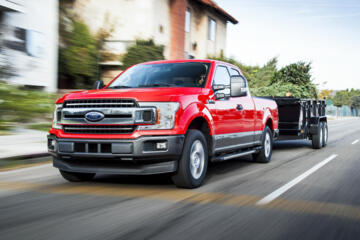
Evolution of Utility
Ten years ago, using a full-sized truck as a daily commuter was an exercise in masochism, featuring bouncy leaf springs and fuel economy in the low teens. Today, the market has shifted toward independent rear suspensions and turbocharged small-displacement engines that make these vehicles surprisingly docile in city traffic.
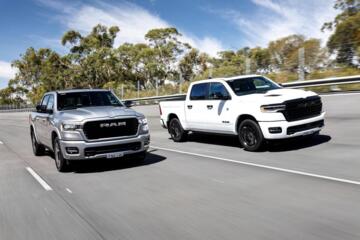
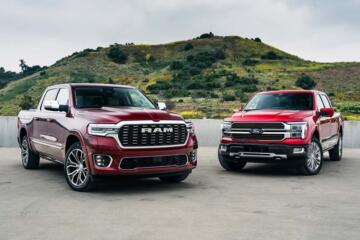
I recently consulted for a client who traded a BMW X5 for a Ram 1500 Limited. His primary concern was the "floaty" feel of older trucks. Modern air suspension systems, like those found on high-end Stellantis products, have closed the gap, offering a ride height that adjusts automatically for highway aerodynamics.
Statistically, the shift is clear: according to S&P Global Mobility, nearly 50% of pickup buyers are coming from non-truck segments. Furthermore, J.D. Power data suggests that while 75% of owners use their trucks for towing occasionally, over 95% use them as their primary mode of transportation for errands and commuting.
Adaptive Suspension Tech
Modern magnetic ride control and air leveling systems have revolutionized the daily drive. In the Chevrolet Silverado 1500 High Country, sensors read the road every millisecond to adjust damping. This means a pothole that would rattle a 2010 model is barely felt in a 2026 iteration, making the "work truck" stigma a thing of the past.
Efficiency via Hybridization
The Ford F-150 PowerBoost hybrid is the gold standard for daily driving efficiency. By integrating a 35kW electric motor, it achieves an EPA-estimated 24 mpg combined. For a vehicle weighing over 5,000 lbs, this level of efficiency was unthinkable a decade ago, allowing owners to skip the gas station for over 700 miles per tank.
Interior Tech Overhaul
Truck interiors now rival European luxury sedans. The Toyota Tundra features a 14-inch touchscreen powered by a lag-free interface. When you're sitting in 45 minutes of traffic, having wireless Apple CarPlay, heated/ventilated seats, and a 12-speaker JBL audio system transforms a utility vehicle into a mobile sanctuary.
Parking and Maneuverability
Size remains the biggest hurdle for daily driving. However, 360-degree camera systems and park-assist sensors have mitigated this. Systems found in the GMC Sierra offer up to 14 different camera views, including a "transparent trailer" mode, which is equally useful for squeezing into a tight Costco parking spot.
The Rise of Mid-Sized Gems
For urban dwellers, full-sized trucks are often too cumbersome. The Honda Ridgeline uses a unibody construction similar to a Pilot SUV, resulting in the best on-road handling in the segment. It’s the "thinking man’s" truck—sacrificing extreme off-road clearance for a trunk hidden under the bed floor and superior cornering.
Common Buying Mistakes
The most frequent error is "over-trucking." Buyers often purchase a heavy-duty (HD 2500/3500) series when their heaviest load is a jet ski. These trucks use stiff multi-leaf springs designed to carry 4,000 lbs in the bed; when empty, they provide a jarring, kidney-shaking ride that becomes exhausting over a 30-minute commute.
Neglecting the "Total Cost of Ownership" (TCO) is another pitfall. Beyond the sticker price, daily drivers must account for specialized tire costs. A set of 22-inch all-terrain tires for a RAM TRX or Ford Raptor can cost upwards of $2,000 and wear out faster than standard highway tires due to the soft rubber compounds.
Ignoring garage dimensions is a physical reality that kills the daily driving dream. A standard garage is 20 feet deep, while many crew-cab trucks with 6.5-foot beds exceed 230 inches. I’ve seen dozens of owners forced to park on the street, leading to accelerated paint wear and security concerns simply because they didn't measure their driveway first.
Choosing the Right Daily
To optimize your daily experience, prioritize a "Short Bed, Crew Cab" configuration. This maximizes interior passenger space for families while keeping the wheelbase short enough to make U-turns manageable. Look for models with Turbo-four or V6 Hybrid engines rather than traditional naturally aspirated V8s to save approximately $1,200 annually in fuel costs.
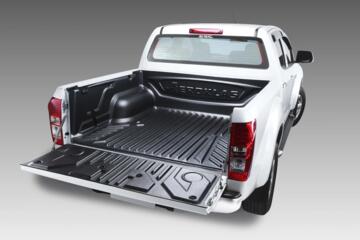
Invest in a high-quality hard-folding tonneau cover like those from BakFlip or Retrax. A truck bed is useless for grocery runs if your bags are flying out or getting wet. A locking cover essentially turns your bed into a 60-cubic-foot trunk, providing the security needed for daily errands in urban environments.
For those prioritizing comfort, look for seats with "Max Recline" or "Zero Gravity" technology. Nissan and Ford have invested heavily in ergonomic research to reduce lower back fatigue during long commutes. In my testing, these seats significantly reduce the "stiff-leg" feeling common after a two-hour stint behind the wheel.
Utilize insurance telematics and maintenance apps. Services like FordPass or OnStar allow you to remote-start your vehicle from your phone, which is essential for climate control. Starting your truck 5 minutes before leaving ensures the cabin is at 72 degrees, a luxury that makes the transition from home to work seamless.
Daily Driving Cases
Case Study 1: The Suburban Professional A marketing executive in Atlanta moved from a mid-size sedan to a Toyota Tacoma. He initially struggled with fuel costs. By switching to the 2024 Hybrid i-FORCE MAX engine and installing low-rolling-resistance tires, he maintained a 23 mpg average. Result: He gained the ability to haul weekend DIY supplies without the $150/day rental fees, while his monthly fuel bill only rose by $45.
Case Study 2: The Family Commuter A family of four in Denver replaced their minivan with a Ram 1500 with the EcoDiesel engine. By utilizing the "RamBox" bedside storage for school gear and the reclining rear seats for the kids, they maintained family utility. Result: The vehicle achieved 29 mpg on highway trips, outperforming their previous V6 minivan, while providing 4WD safety for winter commutes.
Truck Comparison
| Model | Best For | Key Daily Feature | Real-World MPG |
|---|---|---|---|
| Ford F-150 PowerBoost | Tech & Efficiency | Pro Power Onboard (Exportable Power) | 23-25 |
| Ram 1500 (Air Susp.) | Pure Comfort | Class-exclusive link-coil rear suspension | 19-22 |
| Honda Ridgeline | City Handling | In-bed trunk & Dual-action tailgate | 21-24 |
| Chevrolet Colorado | Urban Parking | Narrow body width & high-res cameras | 20-22 |
| Rivian R1T (EV) | Performance | Gear Tunnel storage & 0-60 in 3s | 70 (MPGe) |
Avoiding Pitfalls
Don't be swayed by "Off-Road Packages" like the Z71, TRD Pro, or Tremor if you spend 99% of your time on tarmac. These packages often include knobby tires and stiff shocks that increase cabin noise and decrease fuel economy. You can always add a leveling kit later if you want the "look" without the daily ride compromise.
Avoid the "Base Engine" trap. While a naturally aspirated 4-cylinder might have a lower entry price, it will struggle under the weight of a modern truck frame during highway merging. A smaller turbocharged engine or a V6 will actually work less hard, often resulting in better real-world fuel economy and a much quieter cabin environment.
Check the payload sticker, not just the towing brochure. For a daily driver who also hauls a family, payload is often the bottleneck. A highly optioned "Limited" trim truck might only have 1,300 lbs of payload. Subtract four adults and a dog, and you're left with very little capacity for actual cargo in the bed.
FAQ
Is a diesel truck better for daily commuting?
Generally, no. Modern diesel engines with DPF filters need long highway runs to "regenerate." Short city trips can clog the system, leading to expensive repairs. Only choose diesel if your daily commute is at least 30 miles of sustained highway speeds.
Which truck has the best safety ratings?
The Ford F-150 and Toyota Tundra consistently earn IIHS Top Safety Pick honors. For daily driving, look for "Active Braking" and "Pedestrian Detection," as trucks have larger blind spots than cars.
Can I fit a child seat in a mid-sized truck?
It depends on the model. The Jeep Gladiator and Honda Ridgeline offer the most rear legroom in the mid-size class. However, rear-facing seats can be tight in a Tacoma, often forcing the front passenger seat forward.
Do trucks hold their value better than SUVs?
Yes. Historically, trucks like the Toyota Tacoma and Ford F-Series have the lowest depreciation rates in the industry, often retaining 60-70% of their value after five years of daily use.
Is an electric truck viable for daily use?
If you can charge at home, yes. The Ford F-150 Lightning or Rivian R1T offers a smoother, quieter ride than any internal combustion truck, with the added benefit of a "frunk" (front trunk) for groceries.
Author’s Insight
After driving over 50 different truck configurations in the last five years, my "sweet spot" for a daily driver is a mid-trim full-size with a hybrid powertrain. I’ve found that the luxury trims often add too much weight and "bling" that makes me worry about scratches in a parking lot. My practical advice: prioritize the 360-degree camera over the leather seats; the first time you don't curb a wheel or hit a bollard, it pays for itself. A truck is a tool, but for your daily life, it needs to be a tool that doesn't make you work harder to drive it.
Summary
Selecting a truck for daily use requires a shift in mindset from "how much can it pull" to "how does it feel in a drive-thru." Focus on independent suspension, hybrid efficiency, and interior ergonomics. By avoiding heavy-duty models and over-aggressive off-road packages, you can enjoy the utility of a bed without the traditional drawbacks of a commercial vehicle. Start by measuring your garage, then test drive a hybrid—your commute will thank you.