Driver Interface Tech
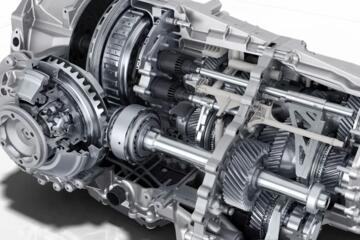
The automotive landscape has shifted from the necessity of rowing gears to the luxury of automated efficiency. Historically, manual gearboxes were the default choice because early automatics were heavy, sluggish, and suffered from significant parasitic power loss. Today, the roles have reversed; a modern ZF 8HP automatic can shift in under 200 milliseconds, a speed no human can match.
However, the technical superiority of the automatic ignores the "feedback loop" between the crankshaft and the driver's left foot. In professional performance driving schools like Skip Barber, instructors often note that students using manuals develop a more intuitive sense of weight transfer and engine braking. By physically engaging the synchromesh, the driver becomes a literal component of the powertrain.
Recent market data shows a fascinating counter-trend: in 2023, manual transmission sales in the United States grew to 1.7% of all new vehicle sales, up from a low of 0.9% in 2021. While the numbers seem small, they represent a conscious "analog rebellion" among enthusiasts who prioritize mechanical transparency over sheer lap times.
Pain Points: Automated Era
One of the primary errors enthusiasts make is assuming that a paddle-shift system provides the same level of cognitive engagement as a H-pattern shifter. Automated systems, particularly Continuously Variable Transmissions (CVTs), often create a "rubber band" effect where engine RPMs do not correlate with speed increase. This disconnect leads to a sterilized driving experience that many find fatiguing rather than relaxing.
Neglecting the manual option also impacts long-term vehicle ownership costs in specific high-performance niches. For instance, out-of-warranty repairs on a sophisticated Porsche PDK or an Audi DSG system can range from $12,000 to $20,000. In contrast, a clutch replacement for a manual equivalent typically costs between $1,500 and $3,500 at independent specialists like BimmerWorld or Pelican Parts.
The consequence of the "automatic-only" trend is the loss of fine-motor vehicle control skills. Modern drivers often struggle with hill starts or rev-matching, skills that force a deeper understanding of a vehicle's torque curve. When the computer manages every shift, the driver becomes a passive observer, leading to a decline in situational awareness on technical roads.
The Disappearance of Entry-Level Engagement
Manufacturers are increasingly removing manual options from "commuter" cars to streamline production. This forces enthusiasts to spend more on premium sports cars just to get a gear stick, creating a barrier to entry for younger drivers wanting to learn the craft.
Thermal Management Issues in Heavy Traffic
Dual-clutch transmissions (DCTs) often struggle with "creep" in stop-and-go traffic. Unlike a manual where the driver can fully disengage the clutch, a DCT may partially slip its clutches to mimic an automatic, leading to premature wear and overheating in urban environments like Los Angeles or London.
Loss of Resale Value in Specific Segments
While automatics sell faster in the general market, "enthusiast" models with manuals are currently commanding massive premiums. Data from Bring a Trailer shows that manual-equipped E92 BMW M3s or 997-generation 911s frequently sell for 20% to 30% more than their automatic counterparts.
Software Latency and Gear Hunting
Even advanced automatics can suffer from "gear hunting" during spirited driving on varying elevations. A manual allows the driver to hold a gear through a corner, preventing an mid-corner upshift that could upset the car's balance and traction.
The Weight Penalty of Automation
Hydraulic actuators, extra cooling lines, and complex control modules add weight. In lightweight sports cars like the Mazda MX-5 Miata, the manual transmission saves roughly 50-70 pounds compared to the automatic, directly improving the power-to-weight ratio.
Strategic Recommendations
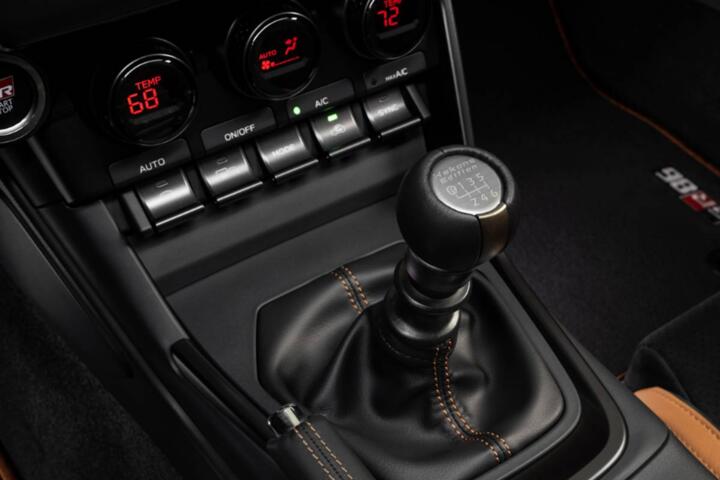
If you are looking to maximize the driving experience, focus on the "tactile trio": throw length, pedal placement, and clutch bite point. For those buying new, look toward brands like Toyota (GR series), Honda (Civic Type R), and Porsche, who have reinvested in manual tech with "intelligent" manual transmissions (iMT) that offer switchable auto-rev matching.
Rev-matching is the most critical skill for manual longevity and performance. By blipping the throttle during a downshift to align engine speed with wheel speed, you eliminate the "jolt" that wears down clutch friction material. Using tools like the Auto-Blip module can help beginners, but mastering the "heel-and-toe" technique manually provides the ultimate reward.
For those worried about daily usability, modern "clutch-by-wire" systems are making manuals easier to live with. These systems use sensors to smooth out engagement, preventing stalls without removing the physical connection. Services like Rent-A-Manual or local driving academies offer specialized courses to help drivers transition back to three pedals before they commit to a purchase.
Investing in high-quality transmission fluid is another often-overlooked step. Switching to a high-performance synthetic like Red Line MTL or Motul Multi-DCTF (if using a DCT) or specialized manual gear oil can drastically improve cold-shift quality and reduce notchiness in older gearboxes.
Enthusiast Case Studies
Case Study 1: The Collector’s Investment
A private collector purchased a 2011 Porsche 911 GT3 RS with a 6-speed manual. While contemporary reviews noted the PDK version was faster on the Nürburgring, the manual version became a "unicorn." Ten years later, the manual car’s valuation increased by 140%, while the automatic versions of similar years stagnated. The result: A $110,000 profit margin attributed solely to the transmission choice.
Case Study 2: The Track Day Efficiency
An amateur racer switched from a modified automatic Nissan Z to a manual Toyota GR86. Despite having 100 less horsepower, the driver’s lap times at Laguna Seca improved by 1.5 seconds. The reason? The ability to downshift aggressively into Turn 2 to utilize engine braking, which the automatic's safety software previously blocked to "protect the engine."
Manual vs. Auto Performance
| Feature | Manual Transmission | Modern Automatic (ZF/DCT) |
|---|---|---|
| Shift Speed | 400ms - 700ms (Human) | 50ms - 200ms (Electronic) |
| Weight | Lighter (80-150 lbs) | Heavier (150-300 lbs) |
| Driver Engagement | Maximum (Flow State) | Minimal (Passive) |
| Maintenance Cost | Low (Simple Clutch) | High (Solonoids/Electronics) |
| Control | Total Gear Choice | ECU-Limited Protection |
Common Mistakes to Avoid
One major error is "riding the clutch"—keeping your left foot slightly depressed while driving. Even minimal pressure can cause the release bearing to spin and the pressure plate to heat up, leading to a $2,000 repair bill within 10,000 miles. Always move your foot to the "dead pedal" once the shift is complete.
Another mistake is "money shifting." This occurs when a driver accidentally shifts from a high gear into a much lower gear (e.g., 5th to 2nd instead of 4th) at high speeds. This forces the engine past its redline, often resulting in bent valves or "thrown" rods. To avoid this, practice a "backhand" grip when shifting toward the outer gates to ensure the centering spring guides you correctly.
Finally, avoid skipping gears excessively during the break-in period of a new car. While modern synchros are robust, varying the gears helps the mechanical components seat properly. Treat your gearbox with the same respect as your engine oil; wait for the transmission fluid to reach operating temperature before attempting high-RPM shifts.
FAQ
Is a manual car harder to drive in traffic?
It requires more physical effort, but modern hydraulic clutches are significantly lighter than those from twenty years ago. In cars like the Honda Civic, the effort is minimal, making it manageable even in heavy congestion.
Do manual transmissions get better gas mileage?
Historically, yes. However, modern 8-to-10 speed automatics often get better highway MPG because they can keep the engine at a lower RPM than a 6-speed manual. The manual remains more efficient in specific track or towing scenarios.
Can you learn to drive a manual in one day?
You can learn the mechanics of moving the car in an hour, but achieving smoothness and confidence in traffic typically takes 1-2 weeks of daily practice. Focus on finding the "friction zone" without using the gas pedal first.
Why are manual cars becoming more expensive?
Scarcity drives value. As manufacturers move toward electrification—where multi-speed transmissions are largely unnecessary—the remaining internal combustion manual cars are becoming "heritage" items for collectors.
Is it bad to shift without using the clutch (floating gears)?
In heavy-duty trucks, this is common. In passenger cars with synchromesh gearboxes, it is highly discouraged. It puts immense strain on the brass synchronizer rings and will eventually lead to gear grinding.
Author’s Insight
I have spent two decades testing everything from vintage Ferraris to the latest EVs, and I always return to my manual garage. There is a specific psychological state, often called "The Flow," that you only achieve when your hands and feet are in total sync with a machine. My practical advice: if you are buying a "weekend" car, ignore the 0-60 mph stats; choose the manual because you will remember the feeling of a perfect downshift long after you forget the acceleration numbers.
Summary
The choice between manual and automatic is no longer about which is faster, but which is more fulfilling. While automatics win the battle of data and efficiency, the manual transmission wins the battle for the driver's soul. For the best experience, prioritize vehicles with high-quality shift linkages, invest time in mastering rev-matching, and maintain your gearbox with premium fluids. The stick shift isn't just an old technology; it is the ultimate tool for those who view driving as an art rather than a chore.